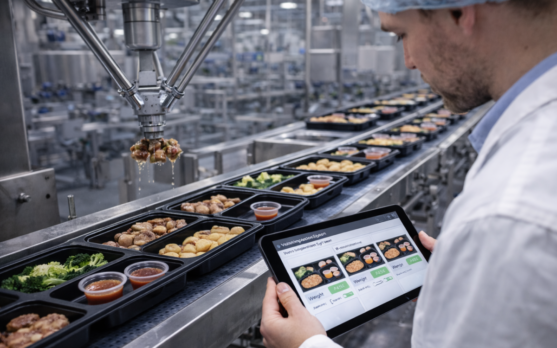
The robot arm is not walking into the frozen meal plant to play chef. It is arriving at the tired end of the line, where trays need to be loaded the same way for the thousandth time, sealed packs must be turned into cases, operators are stretched across changeovers, and a small handling mistake can slow the freezer, the packing room and the dispatch plan before anyone in the office sees the problem.

The robot arm enters through the dull work
Frozen meal production has plenty of work that looks simple until it has to be done all day in a cold, noisy, time-sensitive room. Separate the tray. Orient it. Place the component. Correct the misfeed. Load the sealed pack. Build the case. Clear the reject. Repeat. Then repeat again when the SKU changes and the retailer pack has a different tray, sleeve or case count.
That is where robot arms are becoming useful. Not everywhere. Not as a magic answer for every lasagna, bowl, dumpling or ready-to-heat meal. Their first serious role is in the part of the factory where repetition, fatigue and poor ergonomics quietly leak money.
A good operator can compensate for bad product presentation, weak packaging and awkward line design. That is also the trap. Many frozen plants still rely on skilled people to make weak routines survivable. A person sees a tray sitting badly, nudges it into place, clears a carton, turns a pack, notices the sleeve is not sitting square. The plant keeps moving, but the cost is hidden inside labor, overtime, slower throughput and the constant need for experienced hands in places where it is hard to keep them.
Robot arms make that hidden cost visible. They are less forgiving. A bad tray stack is a bad tray stack. A pouch that arrives twisted is not an inconvenience, it is a failed pick. A carton that varies too much in height or seal profile becomes a machine-handling problem. The robot does not rescue a messy process. It exposes it.
Meal assembly is possible, but only in the right envelope
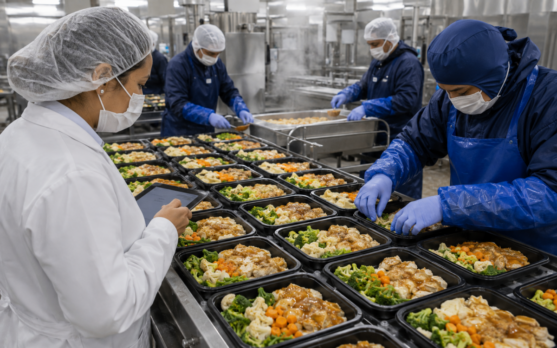
The most attractive image is the robot assembling the meal itself: protein in one compartment, vegetables in another, a sauce cup placed upright, garnish or topping added without the usual handwork. That image is no longer fantasy. AI-enabled systems are now being sold into fresh and frozen ready-meal environments, and some suppliers have started to show credible applications for portioning, depositing and piece picking.
Still, frozen meals are not automotive parts. They are awkward by nature. Chicken pieces do not always sit the same way. Dumplings rotate. Patties stick. Pasta clumps. Frozen vegetables scatter. Sauce cups behave differently from meat portions. A tray with compartments gives the robot a target, but the product still has to arrive in a condition the robot can understand and grip.
Vision helps. Better end-of-arm tools help. So does better feeding. But the factory has to do its part before the robot ever moves. If ingredients arrive in an uncontrolled heap, if product temperature creates too much sticking, if frost changes the surface, if the tray is not stable, if the upstream process swings wildly from one batch to another, the robot cell becomes a daily negotiation.
That is why frozen meal assembly will grow selectively. It will appear first where the component is discrete, the presentation can be controlled, the placement is repeatable and the savings are not eaten by slow changeovers. Sauce cups, patties, formed components, sachets, toppings and some portioned ingredients are more realistic than an open-ended promise that robots can handle every meal format.
Case packing may be the first place the money shows up
For many frozen meal producers, the first strong payback may not be inside the tray. It may be after the tray has already been sealed, sleeved or cartoned.
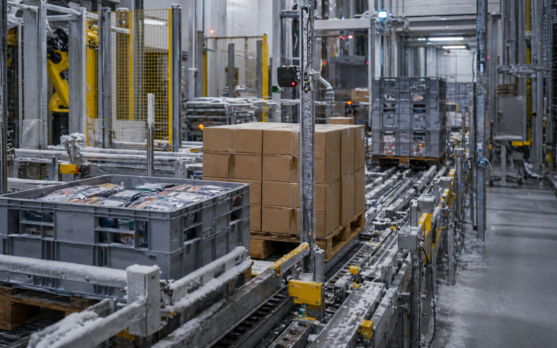
Case packing is a punishing corner of the line. Products arrive fast, often in tight windows, and the task is repetitive enough to drain people without looking especially technical. Sealed trays, pouches, cartons, sleeves and multi-packs have to be grouped, turned, counted and loaded into shipping cases with enough consistency to survive cold storage, transport and retail handling.
This is a better fit for robot arms in many plants. The product is protected. The geometry is more predictable. The food-safety exposure is lower than in open meal assembly. End-of-arm tooling can be built around the pack, not the food. Vision and line tracking can manage orientation. A delta robot or six-axis system can take away a job that few people want to do for years.
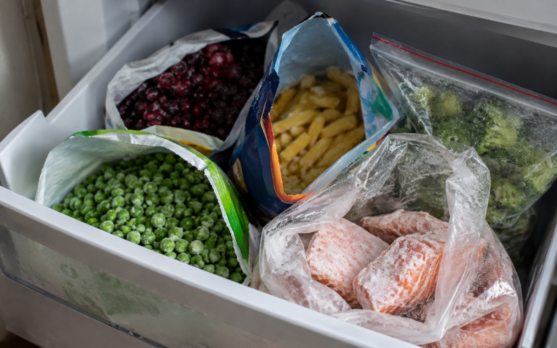
The details still matter. Frozen packs can be stiff, slippery, frosted or slightly variable after sealing. Flexible pouches can shift, wrinkle or trap air. Trays can deform. Sleeves can sit badly. A case packer has to deal with real packaging, not the perfect samples used in a demonstration. The better suppliers talk about orientation, backpressure, seal quality, accumulation and pattern formation because that is where frozen packaging lines actually struggle.
A plant manager will not care that a robot looks elegant if the final case is wrong. The buyer will not care either. The case either reaches the cold store cleanly, scans properly, stacks well and survives the route, or the automation has moved the problem rather than solving it.
Hygiene is not automatic because the arm is robotic
One of the lazier claims around food robotics is that machines are automatically cleaner than people. Sometimes they are. Sometimes they are just harder to clean.
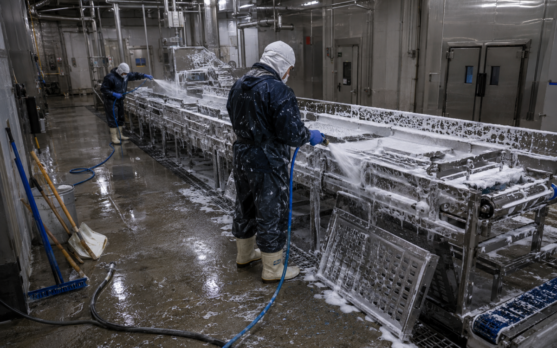
A robot arm in secondary packaging has one hygiene profile. A robot working near exposed food has another. Frozen meal plants can include rice, pasta, sauces, coatings, crumbs, vegetables, proteins and ready-to-eat components, each with its own sanitation reality. A machine with poor access, trapped moisture, exposed fasteners, awkward cable routing or a difficult gripper can turn the cleaning crew into the unpaid integration team.
Food-grade lubrication, hygienic surfaces, washdown tolerance, pressurization, cleanable end-of-arm tools and open access are not extras. They are part of the business case. A robot that saves labor during production but adds cleaning time, inspection friction or audit anxiety is not cheap automation. It is a liability with a purchase order.
There is also a cultural point. Operators and sanitation teams know quickly whether equipment belongs in their room. They know which guards are avoided, which panels are difficult, which surfaces hold residue and which machines always seem to delay start-up after cleaning. Management often learns later, usually through downtime reports, QA holds or quiet irritation on the floor.
Changeover is the hidden test
Frozen meals are a high-mix category. Retailers want exclusive formats, private label versions, different serving sizes, different pack counts, promotional sleeves, diet-specific ranges and seasonal recipes. A line that runs one format all week is one thing. A line that changes from a two-compartment tray to a bowl, then to a family pack, then to a foodservice case, is another.
Robot arms are sold on flexibility, but flexibility has to be proven in changeover. How long does it take to switch the gripper? Can the operator call up the recipe without engineering support? Does the vision system need new lighting or new tuning? Are the tray stacks different? Is the conveyor height right? Does the case packer need mechanical adjustment? Can the sanitation crew clean the new tool quickly enough?
These are not small questions. They decide whether automation helps the plant or becomes a protected island that only works when conditions are perfect. In frozen meals, perfect conditions are rare by lunchtime.
The next few years will favor robot cells that accept the real mess of food production: shorter runs, imperfect packs, limited floor space, operator turnover and pressure to keep producing while the technical team is busy elsewhere. Good HMI design, simple recipe management, remote support, operator training and spare tooling will matter almost as much as the robot itself.
The forecast is disciplined cells, not fantasy factories
In the short term, robot arms will keep entering frozen meal plants through practical applications: tray handling, case packing, palletising, depalletising, pick-and-place for controlled components, and inspection-linked handling. Most projects will be hybrid. People will still feed, verify, adjust, inspect and recover the line when the unexpected happens.
By the end of the decade, more ready-meal producers will connect robotic cells with vision, recipe data, packaging systems and production records. The better installations will not feel like isolated machines. They will behave like part of the line’s memory: what ran, what failed, what was rejected, what changed and where the losses came from.
Longer term, the gap will widen between plants that buy robot arms and plants that redesign work around them. The first group will collect machines. The second will remove fragile manual routines from the places where frozen food is most exposed: before sealing, at the end of the line, during format changes and around the cold chain handoff.
The robot arm will not make frozen meals easy. It will make some weak habits harder to hide. That may be its most useful contribution.