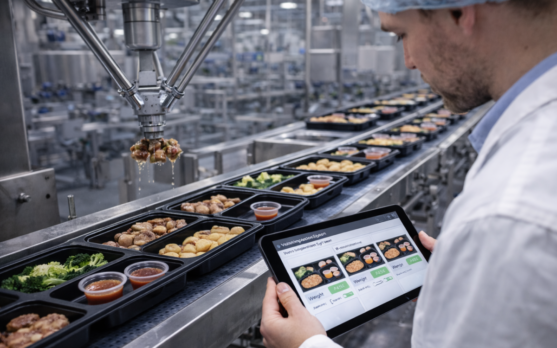
The camera above a frozen line does not have much time to be clever. A tray passes, a seal area flashes under the light, a date code appears for a fraction of a second, a piece of onion skin rides with the diced onion, a sleeve sits slightly wrong on a private-label pack, and the product is already moving toward the next machine. AI vision only matters in frozen food if it can make that decision at line speed, in the cold, under imperfect lighting, without turning good product into waste or bad product into a retailer complaint.

The camera has to earn its place on the line
Machine vision has become one of the more attractive automation stories in frozen food because the promise is easy to understand. A camera does not get tired. It does not look away. It can check every tray, every pack, every passing piece of IQF product, while a human inspector is still trying to keep up with a belt that refuses to slow down.
That promise is real, but it is also where the overselling starts. A camera on a frozen food line is not a magic eye. It is a piece of production equipment that has to live with vibration, water, cleaning chemicals, frost, glare, product variation, changing packaging and operators who need answers quickly. If it cannot survive that life, it becomes another expensive box above the conveyor.
The strongest use cases are often plain. A missing protein portion in a frozen dinner. Noodles caught in the seal area. A sleeve applied to the wrong tray. A batch code that did not print clearly. A foreign material risk in IQF vegetables. A case count that does not match the order. These are not futuristic problems. They are ordinary problems with expensive consequences.
Frozen food gives vision systems a hard job because the line is already under pressure. Product cannot sit around while the system thinks. The cold chain has its own tempo. The inspection decision has to reach the reject device at the right moment, not ten packs later. Detection is only half the work. The other half is rejecting the right item without breaking the rhythm of the line.
Frozen food gives cameras ugly pictures
Factory tours make vision inspection look tidy. Real images are less polite. Ice creates glare. Frost softens edges. Condensation can punish a lens cover. Vegetables from one harvest do not look exactly like vegetables from another. A bag can wrinkle. A tray can tilt. A sauce smear may be harmless in one place and unacceptable in another. A pale product on a pale tray can defeat a system that looked perfect in a trial room.
Lighting becomes more than a technical accessory. It decides whether the system sees contrast or confusion. A frozen potato strip, a green bean, a breadcrumb coating, a noodle, a white rice portion and a glossy film lid all behave differently under light. The same camera can perform well on one SKU and become unreliable on another if the illumination is wrong.
AI can help with natural variation, especially where older rule-based systems struggled. It can learn the difference between acceptable variation and a defect, provided the training data is strong enough and the plant keeps the process inside a sensible operating window. Poor presentation still wins too often. If the product arrives piled, overlapping, spinning, wet, frosted or half-hidden, the algorithm is asked to judge a scene the factory has not controlled.
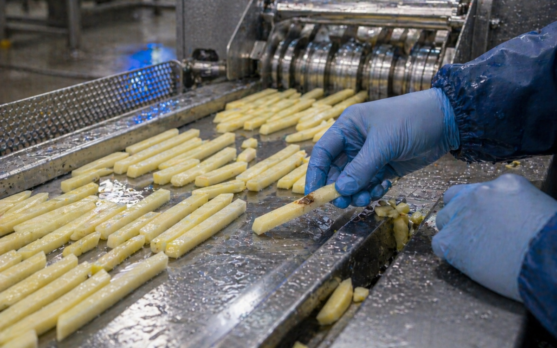
In IQF vegetables, this becomes especially clear. The system is not inspecting identical objects. It is inspecting a crop. Peas, corn, carrots, beans, onion pieces, stems, pods, husks and stray materials come with agricultural variation built in. The line needs vision, sorting logic and ejection precision, but it also needs operators who understand that a seasonal raw material will not behave like a moulded plastic part.
The best inspections sit where mistakes become expensive
Camera placement is a business decision disguised as engineering. Put the camera too early and the plant may catch a problem before value is added. Put it too late and the plant may discover the defect only after product, packaging, labor and cold-chain time have already been spent.
In frozen meals, one of the valuable inspection points is before sealing. That is where the system can check whether the right components are present, whether a compartment has been missed, whether product is sitting in the seal area or whether the meal still matches the promise on the pack. After sealing, the inspection changes. Now the questions are about film, lid, tray position, sleeve, label, code, print quality and pack identity.
Further downstream, the work becomes less glamorous but no less important. Is the correct case being packed? Is the barcode readable? Has the date code printed? Is the pack orientation right? Has the pallet been built for the correct order? Many frozen food claims begin with small errors that look administrative until a retailer receives the wrong product, the wrong date or a pack that cannot be scanned cleanly.
Crop’s, the Belgian frozen food producer, is a useful example of the practical logic. On its packaging lines, vision inspection has been used to check sleeve application, batch number and expiry date, with products moving quickly through a short cold-chain window. That kind of application is not theatrical. It is exactly the point. The system watches the final pack because that is where a private-label error becomes commercially painful.
False rejects can wreck the payback
Every plant wants fewer defects. No plant wants a vision system that rejects so much good product that operators start distrusting it.
False rejects are where the business case gets tested. If the system is too strict, yield suffers, rework grows and the reject bin becomes a second production line. If it is too lenient, QA loses confidence and the machine becomes decorative. The plant then drifts back to manual checks, informal overrides and arguments about whether the system is helping or hurting.
Frozen food makes that tension sharper. Rejected product may not be easy to rework. It may warm, break, smear, lose appearance, miss its dispatch window or require extra handling in a room already short of labor. A false reject on a dry pack is irritating. A false reject on product that needs temperature control can become a small logistics event.
Good systems are tuned around the product, the risk and the cost of error. A foreign material risk does not deserve the same tolerance as a cosmetic size variation. A missing meal component carries a different consequence from a slightly imperfect garnish. A smeared date code may be more serious than a visual blemish if it creates traceability risk.
The best plants will not treat reject rates as a supplier brochure number. They will watch them by SKU, shift, line, raw material lot and season. They will ask whether the system is rejecting more after sanitation, during changeover, on certain pack formats, or when a supplier lot behaves differently. That is where inspection starts becoming management information.
Vision must feed QA, not just the reject bin
A pass-fail signal to the PLC is useful. It is not enough.
The real value begins when vision data is tied to batch, line, SKU, shift, operator window, sanitation timing and customer complaint history. Then the camera becomes more than a gate. It becomes a record of what the plant was actually making, not what the plan said it was making.
This matters in frozen food because many quality failures do not arrive as one dramatic incident. They build quietly. A dosing machine drifts. A depositor misses one corner of a tray. A sleeve feeder starts to misapply packs after changeover. An IQF line sees more extraneous vegetable material from a particular raw lot. A seal issue appears only when one format is running at a higher speed.
If the vision system only ejects and forgets, the plant loses the lesson. If it stores useful inspection data, QA can start asking better questions. Which defect increased first? Which machine was upstream? Which batch was affected? How much product was held? Can the plant isolate the risk quickly, or does it have to search through a day’s production because the records are too thin?
Retailers and foodservice customers are becoming less patient with vague answers. They do not want to hear that the line looked fine. They want to know what happened, what was contained, and why it will not happen again. Vision data can help, but only if the system was integrated with that expectation from the start.
The forecast is fewer blind spots, not perfect factories
Over the next few years, AI vision will grow fastest where the value is obvious: tray checks, seal-area inspection, label and code verification, IQF sorting, packaging identity, foreign material detection where the material can be seen, and end-of-line verification. These are the places where a small mistake can travel too far before someone notices.
By the end of the decade, the better systems will be judged less by the phrase “AI-powered” and more by how easily operators can run them. Can they handle product variation without constant engineering support? Can they be cleaned and restarted without drama? Can QA pull useful reports? Can production teams tune them without destroying consistency? Can the system explain enough of its decisions to keep trust on the floor?
Longer term, vision inspection will become part of the normal control layer in frozen food, sitting beside metal detection, X-ray, checkweighing, coding, warehouse scans and traceability systems. The most advanced plants will not be the ones with the most cameras. They will be the ones with fewer blind spots.
The camera is not there to admire the product. It is there to catch the small failure before it becomes a pallet, a claim, a recall discussion or a difficult phone call from a buyer who has already lost patience.