Bioplastics arrive in frozen food with the right language and the wrong burden. They promise a cleaner origin, a better disposal story and a way out of the fossil-plastic argument that now follows every flexible pouch, tray and wrap into a buyer meeting. But the freezer does not reward origin stories. It tests seal strength, flex crack, puncture resistance, moisture loss, oxygen control, printability, line speed, consumer confusion and the quiet cost of food that dries out before it is sold. A compostable film that lets a frozen pie survive the shelf is interesting. A bio-based pack that weakens the product is just an expensive apology.
The freezer aisle is a harsh auditor
Frozen food packaging is often discussed as if it were a simple environmental choice: replace conventional plastic with a bio-based or compostable material and the category moves forward. In practice, the pack has a colder job. It must keep moisture inside the food, block enough oxygen to protect quality, resist cracks and punctures, seal reliably at industrial speed and still look acceptable after weeks or months in storage, transport, back rooms and freezer cabinets.
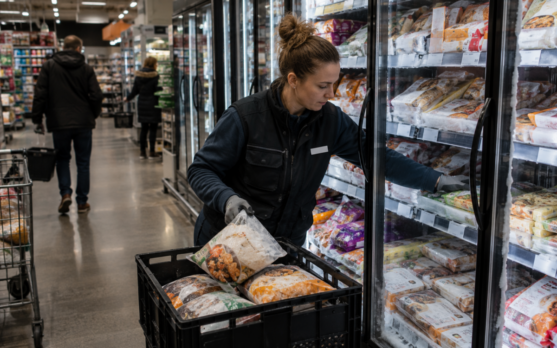
Anyone who has stood in a retail freezer aisle late in the day knows what packaging is up against. Frost on the door. Scuffed cartons. Bags squeezed into poor facings. Products pushed against glass. Ready meals stacked too tightly. Family packs bent in home freezer drawers. A material that feels convincing in a sustainability deck can become less convincing when the corner seal starts to whiten or the product shows dehydration through the window.
Frozen food does not need packaging with better vocabulary. It needs packaging that holds commercial value in place. That is where bioplastics become both attractive and awkward. They carry strong pressure-relief for brands, but they also have to beat a category that has spent decades learning why polyethylene, polypropylene, PET, PA, EVOH and conventional laminates remain hard to dislodge.
Bioplastic is not one material
The first mistake is treating bioplastics as a single family with one environmental meaning. Some are bio-based but not biodegradable. Some are biodegradable but not bio-based. Some are compostable only under industrial conditions. Some are used as modifiers inside blends because they cannot deliver enough performance alone. A frozen food buyer who hears the word bioplastic should not nod. They should ask which polymer, which structure, which certification and which disposal route.
PLA is the familiar name. It has a strong market presence, a renewable feedstock story and industrial compostability in the right conditions. It also has limits around brittleness, heat resistance and impact behaviour unless modified. PHA has become more interesting because it can improve compostable formulations and work in films, coatings and thermoformed applications, but cost and scale remain serious questions. PBAT complicates the marketing story because it is fossil-based and biodegradable, yet it often brings flexibility that compostable films need. Starch blends can be useful, but they are not automatically safe, robust or easy to scale.
That is the industrial reality. Frozen food is unlikely to be won by a single heroic polymer. More likely, the useful materials will be blends, cellulose-based structures, sealant layers, coatings and laminates designed around a product, not around a headline.
The useful examples are narrow, not universal
There are real frozen food examples, and they deserve attention precisely because they are specific. Vikings & Goddesses Pie Company moved frozen bakery products into compostable film packaging using a high barrier NatureFlex cellulose film structure supplied through Elk Packaging. The pack was designed to keep a transparent window, print properly and survive freezer conditions. It also carried compostability certification, which matters because the claim is not left floating as a marketing phrase.
That example is useful. It is not permission to claim that all frozen categories are ready for compostable films. Frozen bakery has its own moisture profile, product geometry, price tolerance and brand story. It is a different packaging challenge from frozen fish, multi-serve vegetables, coated fries, ready meals with sauce or value pizza.
The Pregis and CJ Biomaterials work on PHA and PLA flexible film for frozen foods is another sign that the market is moving beyond lab curiosity. The important part is the structure, not the romance of the material. PHA and PLA are being discussed together because performance has to be engineered. Seal strength, flexibility and compostability have to meet in the same pack. That is the hard part.
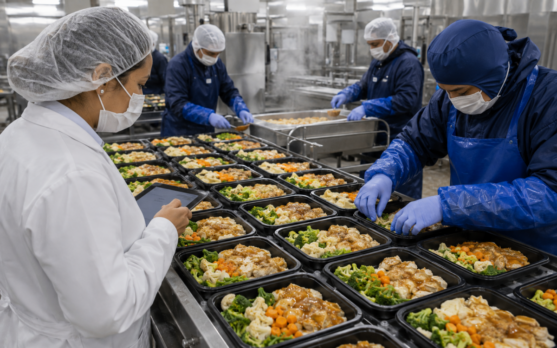
In a plant, the conversation gets practical very quickly. Will the film run on the existing VFFS line? Does it need new sealing jaws or a narrower heat window? What happens when the pack is case-packed at speed? Does ink density affect compostability? Can the supplier guarantee quality across volumes, not just samples? Nobody in operations wants to discover a sustainability problem at 2 a.m. with a line full of rejected bags.
Compostability is not a free pass
Compostable packaging has a place, but frozen food should treat it with care. A pack can meet a certification and still fail commercially if consumers cannot access the right collection system. Industrial composting is not the same as home composting. A compostable pack sent to landfill does not deliver the same story. A compostable film that contaminates recycling because the consumer guessed wrong creates another kind of mess.
Regulation is tightening the language. Europe's PPWR pushes packaging toward recyclability, waste reduction, clearer labelling and stronger scrutiny of substances of concern. That does not automatically favour bioplastics. It favours evidence. A recyclable bioPE or bioPP structure may make more sense for one frozen product than a compostable PLA blend. A certified compostable film may make sense for another. A fibre tray with a bio-based coating may work in a ready meal but fail as a general answer.
Frozen food manufacturers have to be careful with the word biodegradable. It is attractive to consumers, but it can become vague fast. Biodegradable where? In soil, in marine conditions, in industrial composting, in anaerobic digestion, in a controlled lab test? Over what timeframe? Under which temperature and humidity? Packaging claims that do not answer those questions will be exposed by retailers, regulators or waste operators.
Performance still decides the shelf
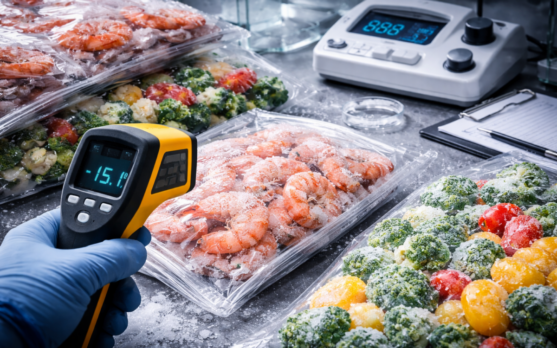
For frozen food, the barrier conversation is not optional. Water vapour matters because freezer burn damages texture, colour and eating quality. Oxygen matters because fats, flavours and pigments still degrade over time, even in cold conditions. Mechanical strength matters because frozen products can have sharp edges, hard surfaces and low-temperature brittleness in the pack itself.
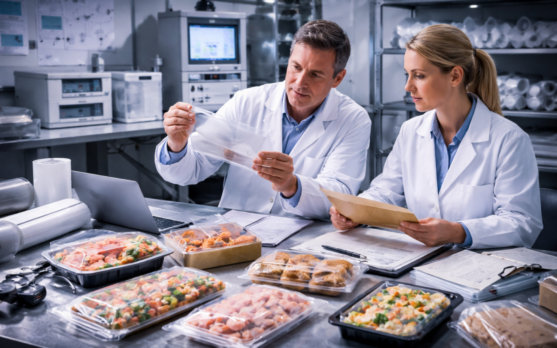
That is where many bioplastics meet their hardest limit. PLA can be too stiff or brittle without modification. Starch-based materials can be sensitive to moisture. PHA is promising, but still fighting the economics and availability of scale. PBAT helps flexibility but muddies the bio-based story. Cellulose films can offer high barrier performance, but they need the right sealant and conversion structure. None of these weaknesses makes the materials irrelevant. It simply means they need to be purchased like engineered packaging, not like a sustainability badge.
Private label adds pressure. Retailers want progress on plastic, but they also protect price points. A premium frozen bakery brand may carry a compostable pack more easily than a discount vegetable range. A foodservice operator may accept a higher material cost if the pack simplifies handling or supports a customer mandate. A mass frozen potato SKU has less room for packaging romance. The margin will say no before the sustainability report says yes.
Where adoption will actually happen
In the next two to three years, bioplastics in frozen food will stay selective. Frozen bakery, niche premium products, foodservice portions and carefully controlled SKUs are the most believable early territories. Cellulose-based compostable films, PHA/PLA blends and certain compostable flexible structures will get trials where the brand can justify cost and the product does not punish the material too harshly.
By the early 2030s, the materials should improve and supply should broaden. European Bioplastics expects global bioplastics production capacity to grow strongly by 2030, and packaging already represents the largest application area. That scale will help, but it will not erase the category's physics. The more interesting growth may come through blends, coatings and hybrid structures, not through a clean swap from conventional plastic to one named bioplastic.
Longer term, frozen food will probably split by use case. Some products will move toward recyclable mono-material PE or PP because collection and sorting favour them. Some premium or controlled applications will use compostable films. Some ready meals will use fibre trays with bio-based or compostable coatings. Some foodservice formats will adopt bioplastics because the disposal chain is easier to control than in household retail.
The material that wins trust in frozen food will not be the one with the nicest origin story. It will be the one that survives the freezer, protects the product, comes with a credible end-of-life route and does not ask the retailer to explain away another fragile claim.