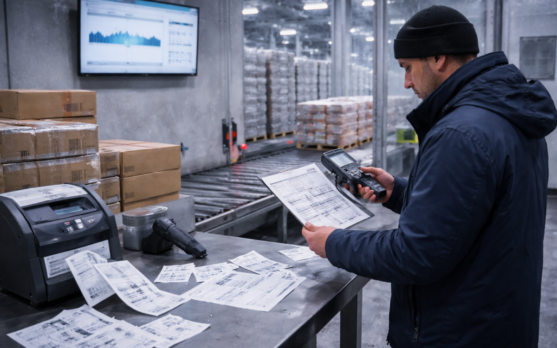
At the end of a production shift, the organic waste area often says what the meeting room avoided. Potato pieces that should have had another route. Sauce left in trays. Vegetables rejected after a quality hold. Product stuck to film. A few frozen cases opened because the outer packaging failed. None of it looks dramatic. That is the uncomfortable part.
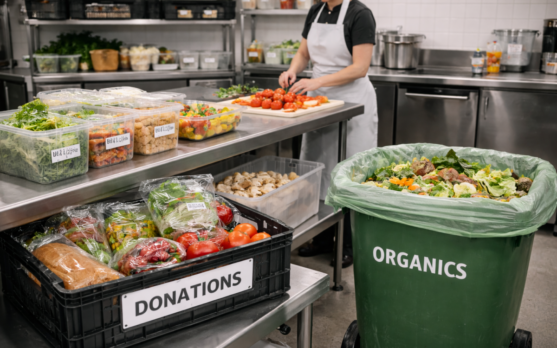
The bin was easier when it stayed anonymous
Organics separation used to be sold as a neat job. Put the right bins in place. Add signs. Train the team. Keep material out of landfill. Let the waste contractor collect it. Put the diversion figure somewhere in the sustainability file.
It was never that simple inside a food plant.
In frozen food, the organic stream is rarely one thing. It may contain avoidable line loss, normal trim, food that could have been reworked, product trapped in packaging, material held too long by QA, or surplus that missed its chance to move. Once all of that enters the same stream, the business loses the story. It still has tonnage. It does not have truth.
That is where the subject gets more serious. The bin is not only a place where waste goes. It is a rough record of decisions made too late, processes designed badly, and people on the floor doing what the system made easiest.
A clean organic stream is useful. A smaller, better-understood stream is more valuable.
In a potato plant, “organic waste” is too lazy a phrase
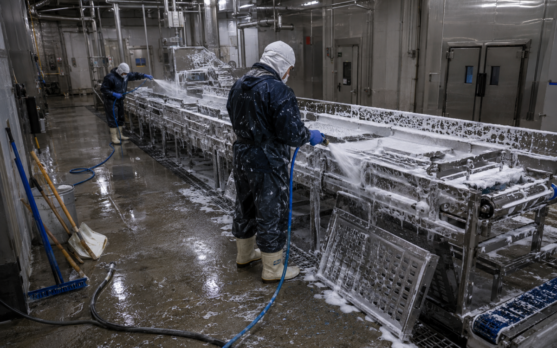
Frozen potato plants show the problem clearly. A potato comes in as raw material, but it does not leave as only fries. There are peels, slivers, short pieces, starch, trim, batter residues, off-spec pieces and sometimes fully edible material that simply does not fit the product being made at that moment.
Calling all of that “organics” is a shortcut. Sometimes a costly one.
Some material may be right for animal feed. Some may belong in starch recovery. Some can go into formed products. Some is true residue. Some is a yield problem dressed up as waste. Some is a specification problem. Some is the result of line speed, blade condition, sorting sensitivity, raw material quality or a customer requirement that nobody wants to challenge.
Lamb Weston has described using almost the whole potato, including recovering starch byproducts for batters and coatings and upcycling shorter pieces into products such as Tater Puffs. McCain has reported a reduction in food waste intensity since 2020, with progress in potato facilities and more diversion to animal feed in some regions. Those examples are not useful because they sound polished. They are useful because they remind the industry that value still exists in places where weaker systems only see waste.
A plant that understands its waste streams can ask better questions. Why are these pieces being rejected? Why is this much sauce left behind? Why is this residue mixed with packaging? Why is rework theoretical but not practical at line speed?
The answer is rarely “we need another bin.”
The retail freezer has its own quiet leak
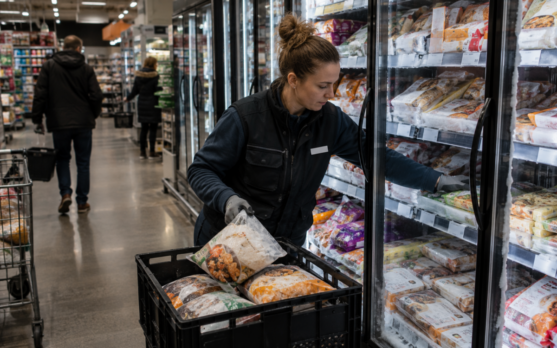
Retail organics discussions usually start with fresh produce, bakery and prepared food. Frozen is often treated as cleaner. More controlled. Less urgent.
That confidence can be misleading.
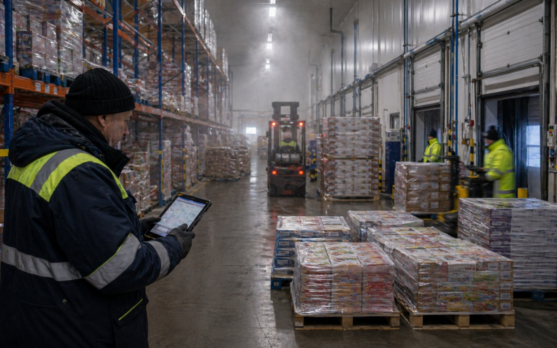
A frozen case with damaged outer packaging may still contain safe food. A product from a freezer alarm may need a proper temperature-history decision, not panic. A seasonal SKU may still be sellable if someone acts early. A slow-moving product after a weak promotion may have a donation route, markdown route or secondary channel route. But those options need to exist before the store wants the space back.
Store teams do not have much time for theory. They have a back room to clear, a freezer to fill, a manager asking about shrink and a delivery coming in. If the system has no clear recovery route, edible frozen product can slide down the chain fast.
First it becomes awkward stock. Then a back-room problem. Then a disposal decision.
The organic stream may receive only part of it, especially if packaging is hard to separate. But the missed value happened earlier. The product was not necessarily lost because it became unsafe. It was lost because the business did not move quickly enough while it still had choices.
Packaging can ruin the recovery route
Frozen food is a packaging-heavy category. Bags, trays, cartons, film, sleeves, liners, labels, shrink wrap. Add sauce, ice, crumbs, vegetable pieces, thawed residue or damaged product, and separation gets messy very quickly.
On paper, it looks manageable. On the floor, during a busy shift, it may not be.
A worker can separate clean trim. A worker can separate clean packaging. The trouble starts with food stuck to packaging, packaging stuck to food, or material that arrives too mixed for anyone to classify without stopping work. If the right action takes longer than the wrong one, the wrong one eventually becomes normal.
Contamination is not a detail for the waste contractor to fix later. It decides where the material can go. Animal feed needs cleaner streams. Upcycling needs control. Composting and anaerobic digestion may accept more mixed material, depending on the operator, but even those routes have limits. Packaging fragments, cleaning residues, mould, odours and badly mixed loads reduce options.
This is where packaging engineers should be pulled into the same room as operations, QA and waste partners. Not after launch. Before the system starts producing contaminated organics every day.
If a package protects the product but makes recovery almost impossible, that trade-off should at least be visible.
A tonne is not just a tonne
Food waste hierarchy charts have been around for years. Prevention first. Feed people. Upcycle. Feed animals. Compost or digest. Landfill last. Most companies know the order. Daily operations often behave differently.
The route that is already available tends to win.
The collector is scheduled. The donation window has closed. The material is mixed. The shift needs to finish. The store needs freezer space. The plant wants the line moving. Suddenly a lower-value route looks like a practical answer.
Tesco’s 2024 correction showed why that can become more than an internal embarrassment. Food waste the company had believed was going to animal feed had instead been used for anaerobic digestion, and Tesco restated its reduction progress from 45% to 18%. Anaerobic digestion has a role. But it is not animal feed. It is not donation. It is not prevention.
Frozen food companies should pay attention to that distinction. A tonne of edible frozen surplus is not the same as a tonne of peels. A tonne of recoverable potato pieces is not the same as a tonne of contaminated tray scrapings. A tonne routed to animal feed is not the same as a tonne sent to digestion.
Counting weight is not enough. The destination tells the harder truth.
Compliance will open the lid
Europe’s 2030 food waste targets put pressure directly on processing, manufacturing, retail, foodservice and households. In the U.S., state-level rules in places such as California, Washington and Massachusetts have already moved organics management closer to ordinary business operations.
That pressure will not make a bad process good. It will make bad processes harder to hide.
For frozen manufacturers, organics separation belongs beside yield reports, rework logs, QA holds, packaging reviews and customer specifications. For retailers, it belongs beside stock ageing, freezer incidents, markdown timing and donation routes. For foodservice, it belongs beside menu planning and freezer inventory, not only dish-room separation.
The best operators will not spend much time bragging about bins. They will want to know why those bins are filling.
They will ask what was edible. What was recoverable. What was contaminated. What was unavoidable. What was caused by specification. What was caused by planning. What was caused by delay.
That is the uncomfortable value of organics separation. It stops being a disposal exercise and starts behaving like a witness.