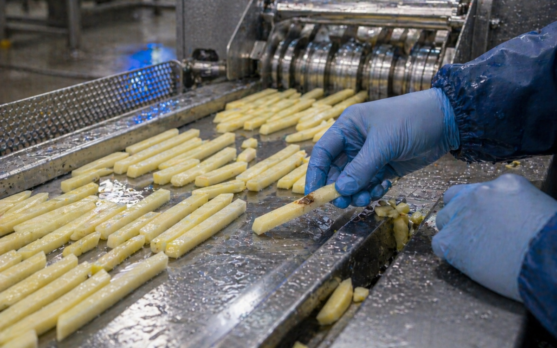
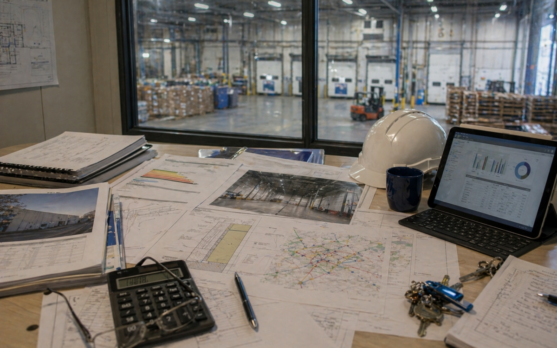
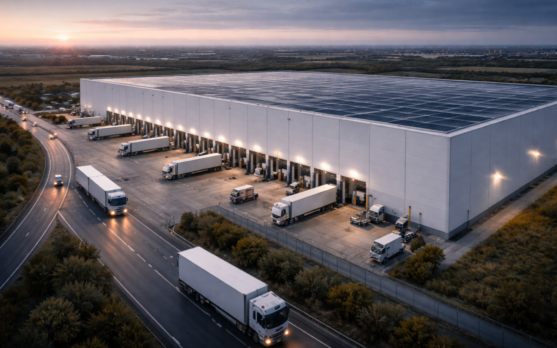
A new potato plant is easy to celebrate from a distance: cranes, steel, jobs, local growers, bigger fry output, export ambition. Inside the industry, the mood is more careful. Every frozen fry facility is a long bet on land, water, energy, labor, cold storage, QSR traffic, retail contracts and enough processing-grade potatoes to keep the line fed without breaking the margin. Capacity looks impressive at the opening ceremony. It becomes serious when the market asks whether the plant can stay full at the right price.

A new plant is a bet with a long tail
Potato processing capex has a different weight from most frozen food investment. A fry plant is not a flexible little factory that can be turned toward another category when demand moves. It is tied to growers, varieties, storage, steam, frying, freezing, wastewater, cold warehouses and customers who expect the same strip in every case.
That is why new facilities matter. They show where the industry thinks the next reliable potato supply will be, where QSR and foodservice demand is strong enough, where ports and roads can carry frozen product, and where processors believe they can run with enough efficiency to defend margin. The building is only the visible part. The real investment is the system around it.
Recent projects also carry a warning. The frozen potato sector is still large and commercially attractive, but more capacity does not always mean a healthier market. A line running below its economic rhythm can become an expensive promise. A plant built too far from the right raw material becomes a logistics problem. A region with too much output chasing weak export demand can feel the pressure quickly.
Europe is powerful, dense and exposed
Europe remains the industrial centre of processed potato. Belgium, the Netherlands, France and Germany sit close to growers, ports, equipment suppliers and generations of processing know-how. The scale is enormous: millions of tonnes of fries and potato products, dozens of facilities, deep export corridors and a customer base that reaches far beyond Europe.
That density is an advantage until it starts to crowd itself. The Belgian market offered a sharp reminder in 2026, when Clarebout and Lutosa adjusted operations amid oversupply pressure. Temporary unemployment, cancelled weekend work and falling processing potato prices do not erase Europe’s strength. They show what happens when capacity, crop, demand and export pricing stop moving neatly together.
European capex now has to be read with two eyes. One eye sees world-class processing depth. The other sees energy cost, labor pressure, farmer tension, environmental scrutiny and harder competition from Asia and other emerging supply regions. A processor can still build well in Europe. It simply has to be more certain about why that plant belongs where it does.
Northern France is becoming Europe’s pressure valve
Northern France deserves its own place on the capex map. It is close to the Belgian and Dutch processing belt, rich in agriculture, connected to ports and increasingly attractive to processors looking for room, growers and logistics. The region’s “Chip Valley” story is not just local enthusiasm. It is part of a broader shift in European frozen fry capacity.
Agristo’s Escaudoeuvres project is the clearest recent signal. The company has started building on the former Tereos site, with the long-term intention of reaching 300,000 tonnes of finished frozen potato products per year and creating up to 300 jobs. Industrial start-up is planned for the second half of 2027. That is not a small regional addition. It is a serious piece of European capacity.
Clarebout’s Dunkirk operation also shows why northern France matters. A French plant connected to Belgian expertise, port access and export routes gives the region a practical role in the European fry machine. The story is not just about cheaper land or political support. It is about locating capacity where potatoes, people, energy, water, trucks, ports and customers can still be made to work together.
For Europe, this is both opportunity and pressure. New French plants can strengthen the region’s global position. They can also add volume into a market already learning that utilization matters as much as output.
North America is learning the discipline of utilization
North America still has some of the strongest frozen potato infrastructure in the world. It has established growing regions, major QSR relationships, experienced processors and large domestic demand. McCain’s CAD 600 million Coaldale expansion in Alberta remains a major statement: more output, more jobs, renewable energy commitments, biogas from wastewater and a larger role for a Canadian supply base.
But the North American story is no longer simply expansion. Lamb Weston’s fiscal 2025 results showed the other side of the cycle: softer restaurant traffic, inventory pressure, temporary production curtailments and higher manufacturing costs per pound. That matters because a fry plant needs rhythm. Fixed costs do not become smaller because restaurant traffic is cautious.
There is a useful lesson in that contrast. Coaldale shows why processors invest when they trust the crop and customer base. Lamb Weston shows why even large players have to manage capacity carefully when demand, price and inventory become less comfortable. A new facility may be a growth signal. A curtailed line is the reminder that capacity has to be earned again every week.
Agristo’s planned Grand Forks, North Dakota facility adds another layer. The first U.S. production site for the Belgian processor is tied directly to Red River Valley potatoes, grower partnerships and North American market access. The plant is not only a factory announcement. It is a move into a crop region with processing ambition.
Regional supply is being rebuilt outside the old centres
The most interesting capex is not always in the traditional heartlands. Brazil, India, China and Australia are all part of a wider move toward regional supply platforms.
Brazil is a strong example. McCain’s planned R$1.8 billion expansion at Araxa is aimed at frozen potato production for retail, cash-and-carry, foodservice and fast-food channels, with new lines expected to start in the second half of 2027. Brazil has the demand, the foodservice base and the reason to reduce dependence on long supply chains. The plant expansion is a local-market decision with regional meaning.
Australia tells a similar story in a different geography. Farm Frites’ approved Dooen facility in Victoria is expected to process up to 250,000 tonnes of Australian-grown potatoes per year into frozen fries and specialties, with commissioning planned for early 2027. Its location near grower regions and transport infrastructure is central to the logic. Australia has imported frozen potato products for years. A local platform changes the conversation with foodservice and retail buyers.
Asia-Pacific is even more complicated. China and India are no longer just demand destinations for imported fries. Both are building or expanding processing capacity, supported by QSR growth, contract farming, export ambition and cold-chain development. The effect will be felt most sharply in price-sensitive regional markets: Southeast Asia, the Gulf and parts of East Asia where landed cost and lead time matter.
The raw material decides whether capex survives
Factory announcements tend to focus on investment value, jobs and capacity. The harder question is less public: where will the right potatoes come from, every season, at the right solids, size, fry color and storage quality?
A fry plant is only as strong as its grower base. The plant can be modern, automated and energy-conscious, but if the region cannot deliver processing-grade potatoes consistently, the business becomes fragile. That is why new facilities are often tied to contract farming, variety trials, seed programs, storage investment and agronomy support long before the first commercial production run.
Energy and water now sit beside raw material in every serious capex decision. A plant that cannot manage steam, frying, freezing, wastewater and cold storage efficiently will carry a cost penalty for years. Packaging, labor availability, planning approvals, environmental permits and access to cold-chain logistics all belong in the same calculation.
The new frozen potato plant is therefore less a monument than a commitment. It ties the processor to a region, and it tests whether that region can support an industrial promise. Build close to the crop, close to demand and close to logistics, and the plant has a chance. Build only because the market looked attractive on a slide, and the steel may stand longer than the business case.