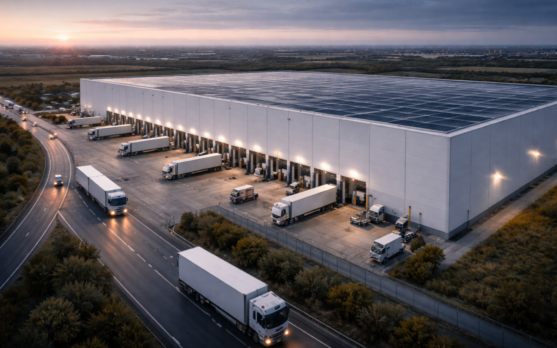
A cold store can look calm from the outside: insulated panels, sealed docks, pallets stacked in neat frozen silence. Inside, the building is fighting all day. Warm air enters through doors. Evaporators ice up. Compressors chase peaks. Forklifts wait in staging lanes. A late truck turns a smooth loading plan into a heat leak. The electricity bill is only the visible part of the story. In frozen food logistics, energy efficiency has become a test of discipline, refrigeration judgement and whether the warehouse can protect product value without wasting power.

The freezer is now a margin machine
Cold storage used to be discussed as capacity. How many pallet spaces? How close to the port, the factory, the retailer's distribution centre? How fast can the site receive, pick and dispatch? Those questions still matter. But the frozen warehouse is increasingly judged by another measure: how much power it burns to hold that capacity steady.
Energy in a cold store is not a background cost. It sits inside the price of every pallet day, every case picked, every blast-frozen load waiting for release, every promotion that fills a chamber beyond the plan. When power costs rise, the warehouse manager feels it before the customer does. Then the pressure begins: can the site reduce consumption, avoid peaks, protect service levels and still keep product quality untouched?
That last part is where the work gets difficult. Frozen food cannot be treated like a generic industrial load. A freezer is allowed to become more efficient only if it remains a freezer in the product's interest. Ice cream, coated potato products, frozen bakery, ready meals, vegetables and plant-based items all carry different sensitivities. Texture, frost, dehydration, recrystallisation, packaging damage and temperature history do not appear on an electricity invoice, but they can destroy the value the invoice was supposed to protect.
The cheapest energy is often lost at the door
The industry likes new equipment. Better compressors, smarter controls, natural refrigerants, automated high-bay warehouses, AI energy systems, thermal storage. All of that has a place. Still, many frozen warehouses lose a surprising amount of energy through habits that look too ordinary for a capital presentation.
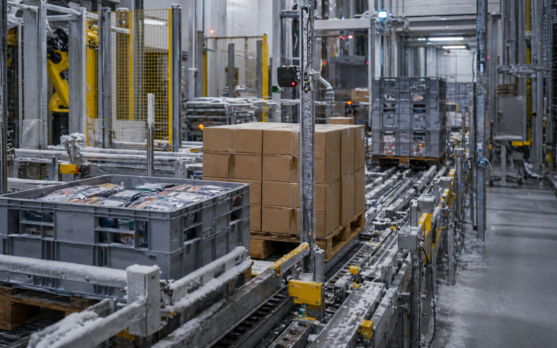
A door left open during loading. A damaged seal nobody rushes to fix. A staging area used as overflow because inbound arrived late. Strip curtains pushed aside and never reset properly. Pallets parked too long in a warmer dock lane. Evaporators working harder because airflow is being abused by layout, traffic or poor stacking. None of this sounds like innovation. It is where the kilowatts go.
Walk through a busy frozen dock on a difficult day and the issue becomes physical. Fog rolls at the threshold. Drivers wait for bay instructions. Warehouse staff are trying to keep movement fast, but frozen logistics rarely happens in perfect sequence. A late trailer compresses the schedule. A customer order changes. A chamber door cycles more than planned. The refrigeration plant pays for every hesitation.
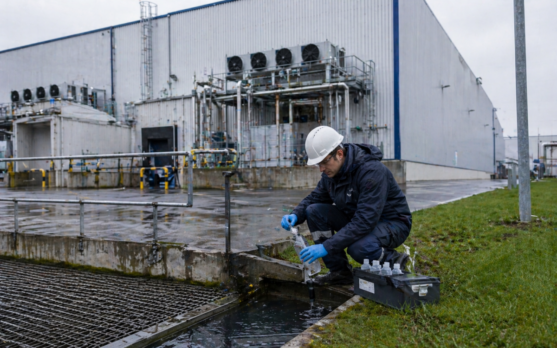
The best energy work in cold storage often starts with unglamorous observation: how doors are used, how long product sits outside temperature-controlled rooms, how defrost is scheduled, where ice builds up, whether fans are running against poor loading practice, and whether people on the floor understand that a careless door habit is not just a comfort issue. It is cost, carbon and product risk.
Refrigeration controls are becoming commercial tools
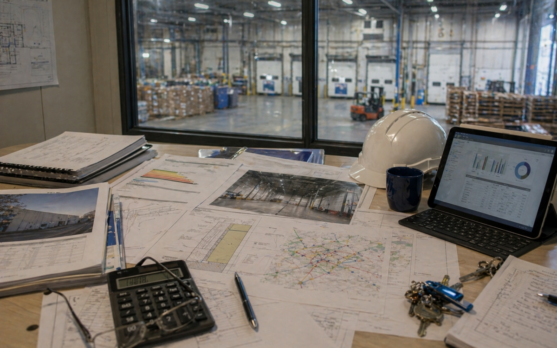
A modern cold store cannot be managed only by a setpoint and a monthly energy bill. The site needs to know where consumption happens, when peaks arrive, which rooms behave badly, which doors create losses, which compressors are being driven harder than they should be, and whether defrost is cleaning the coil or simply adding heat to a system already under pressure.
Better controls change the conversation. Floating head pressure, variable speed drives, improved fan control, smarter defrost, leak detection, condition-based maintenance and room-level energy monitoring are not technical ornaments. They decide whether the building can operate close to its real need rather than its historical habit.
There is a strong commercial reason for this. Food companies and retailers are becoming less patient with hidden inefficiency in the supply chain. A warehouse that cannot explain its energy profile will find it harder to defend its costs. A 3PL that can show disciplined refrigeration management, reduced peaks, lower consumption per pallet and stable product protection has a better story than one selling space and hoping the utility market behaves.
The old language of energy efficiency was soft. Sustainability, responsibility, lower footprint. The new language is sharper: exposure, resilience, recoverability, asset value. A cold store with poor energy intelligence is not only more expensive to run. It is harder to price, harder to improve and harder to trust when power markets turn ugly.
Refrigerants have moved into the boardroom
Refrigeration strategy is no longer a technical note at the end of a construction plan. It now touches capital planning, service availability, compliance risk, insurance, training and future resale value. A system that looks acceptable today can become awkward before the building reaches midlife.
The shift away from high-GWP refrigerants has already changed the mood around new projects and major retrofits. Operators are looking more seriously at ammonia, CO2 and other lower-GWP routes, but every choice brings its own engineering, safety and maintenance realities. Ammonia is efficient and well established in industrial refrigeration, but it demands competence and safety discipline. CO2 has strong regulatory appeal and is gaining ground, yet it behaves differently and requires its own technical comfort. There is no universal answer that can be pasted across every frozen warehouse.
Refrigerant decisions now have to be made with the full asset in mind. Who can maintain the system locally? What skills are available on night shifts? What are the leak implications? What happens to parts, service contracts and training over the next decade? How does the refrigeration plant interact with automation, blast freezing, room temperature strategy and energy management?
There is also a wider environmental debate emerging around refrigerants, degradation products and water impact. That subject deserves its own treatment, because it is not the same as the operational question of energy efficiency. Still, the message for cold storage operators is already clear enough: a refrigeration choice is no longer hidden inside the machine room. It is part of the facility's strategic risk profile.
Automation can save energy, but only if the building behaves
Automated frozen warehouses can make a powerful energy case. Higher storage density means less building envelope per pallet. Fewer people in the chamber can reduce door movements and comfort-driven compromises. Automated storage and retrieval can limit wasted travel and improve product flow. In a well-designed high-bay freezer, the building starts to feel less like a warehouse and more like a controlled refrigeration asset.
But automation does not forgive poor system thinking. If inbound staging is badly planned, the heat leak simply moves to another part of the operation. If the WMS creates congestion, the refrigeration plant still pays. If maintenance access is difficult, a small fault can carry a larger operational penalty. If the automation vendor, refrigeration engineer and cold-chain operator do not design around each other, efficiency becomes a promise that disappears in commissioning.
The better question is not whether automation saves energy. It can. The better question is whether the site has been designed as one operating system: storage density, airflow, dock discipline, refrigeration load, product turnover, maintenance strategy, emergency access and software logic. A tall automated freezer that handles frozen product with minimal exposure can be very efficient. A poorly integrated one can become an expensive cold box with elegant robotics and ordinary problems.
Setpoints will become a commercial debate
The conversation around raising frozen storage temperatures from the long-established -18°C standard to -15°C has forced the industry to say something uncomfortable out loud: some energy assumptions may be inherited rather than proven. Research and industry trials have suggested that, for many products under controlled conditions, a three-degree change could reduce energy use and emissions without compromising safety or quality.
That does not make the move simple.
A warmer setpoint is not an energy shortcut. It is a product-risk decision. Product type matters. Packaging matters. Storage duration matters. Temperature fluctuation matters. So does the difference between a stable controlled chamber and a real chain with docks, vehicles, back rooms and retail freezers. A frozen vegetable may not behave like a premium dessert. A pizza does not carry the same texture risk as an ice cream. A coated product may keep within safety expectations and still lose bite.
If the industry moves in that direction, the serious players will validate by category, not by slogan. QA, R&D, logistics and commercial teams will need to sit at the same table. Retailers will want confidence. Insurers and auditors may ask harder questions. Energy teams will have to prove that savings do not come from pushing hidden quality loss downstream.
The direction is worth watching because it changes the role of the cold store. The warehouse is no longer only asked to hold a fixed temperature. It is asked to understand why that temperature exists, what product it protects, and where the real safety margin sits.
Efficiency cannot outrun the product
The next generation of cold storage will be measured in more precise ways. Energy per pallet. Energy per picked case. Peak demand avoided. Refrigerant leakage. Room stability. Door-open time. Product exposure at handover. Carbon per movement. These metrics will be useful, as long as they do not become another dashboard that ignores the food.
A frozen warehouse exists to protect value. If an energy project reduces consumption but increases frost damage, claims, handling delays or temperature abuse, the saving has moved into another account. It may appear later as waste, downgraded stock, customer dispute or lost confidence.
The strongest cold storage operators will not be those that buy the newest machinery first. They will be the ones that understand where their buildings really leak energy, where their refrigeration plant is working too hard, which rooms carry unstable loads, which customers create awkward peaks, and which product categories need stricter protection. They will know their kilowatts in the same way good manufacturers know yield loss.
That is the mature version of sustainability in frozen logistics. Not decorative. Not vague. Measured against the product.