A frozen food plant rarely fails in one clean, dramatic moment. It usually starts with a compressor running harder than it should, a spiral belt pulling slightly out of rhythm, a carton erector stopping twice per shift for no obvious reason, or a packaging line operator learning to live with a fault that everyone has stopped reporting. Predictive maintenance matters in this sector because frozen food is unforgiving. Temperature, texture, throughput, hygiene windows, retail service levels and energy bills all sit too close together for maintenance to remain a department that arrives after the alarm.

The first warning is often too quiet for the production meeting
On paper, predictive maintenance still sounds like a technology story. Sensors, machine learning, dashboards, condition monitoring, remaining useful life. Useful language for vendors. Less useful at 2:40 a.m., when the night shift is trying to keep a poultry line running, the freezer is frosting faster than usual, and the case packer is stopping just often enough to ruin the rhythm of dispatch.
The older maintenance model was built around scheduled stops, experienced ears and urgent phone calls. It worked better than many digital evangelists like to admit. A good engineer could hear a bearing before a dashboard could name it. A seasoned refrigeration technician knew when suction pressure felt wrong, even if the alarm limit had not been crossed. The problem now is scale. Frozen plants are running longer, with tighter labor, higher energy costs, more SKU complexity and less tolerance from retail customers when a delivery window slips.
In that environment, predictive maintenance is no longer a shiny add-on. It is a way of catching weak signals before they become product, labor and customer problems. The valuable signal may be a motor current drifting upward over several days. Or vibration on a gearbox that appears only under a certain load. Or a defrost pattern that has changed after a product mix shift. None of these events looks spectacular on its own. Together, they can tell a plant that a failure is forming.
The compressor room is where the commercial risk begins
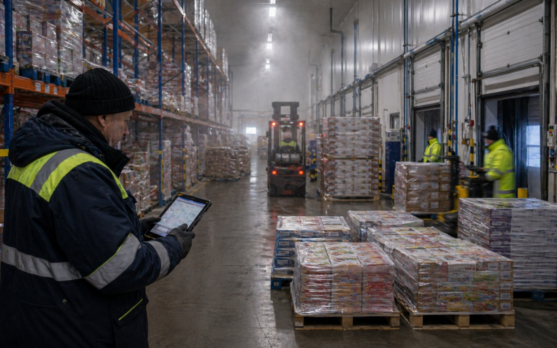
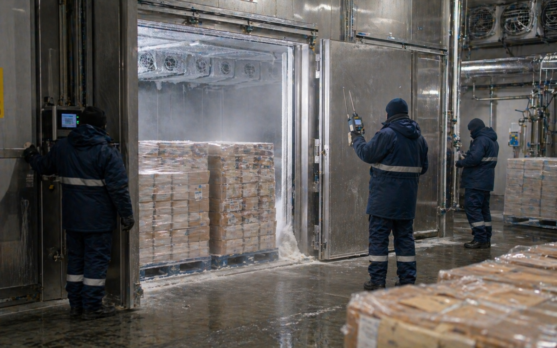
In frozen food, the compressor room is too often treated as infrastructure, somewhere behind the production story. That is a mistake. It is one of the most commercially sensitive parts of the plant. When refrigeration becomes unstable, the damage does not stay in the engine room. It moves into freezer performance, energy consumption, product temperature, loading delays, QA review and sometimes into the relationship with the customer.
A compressor does not need to stop completely to cost money. It can run inefficiently. It can pull more energy than usual. It can recover slowly after doors are opened. It can force evaporators into behavior that the production team reads as a freezer issue, while the root cause sits elsewhere. The plant still runs, but it runs with less margin.
This is where condition monitoring becomes more useful than a generic AI promise. Pressure, temperature, vibration, motor current, oil condition, valve behavior, compressor cycling and defrost history all matter. The best systems do not simply announce that a component may fail. They help maintenance teams ask better questions: is the refrigeration system struggling because of equipment wear, product load, door discipline, ambient conditions, cleaning practice or poor sequencing?
That distinction matters. A frozen warehouse or processing plant can spend heavily on advanced controls and still miss the operational habit that is damaging performance. Predictive maintenance works only when the data is read by people who understand refrigeration, not just by software that detects anomalies.
The spiral freezer is not one machine
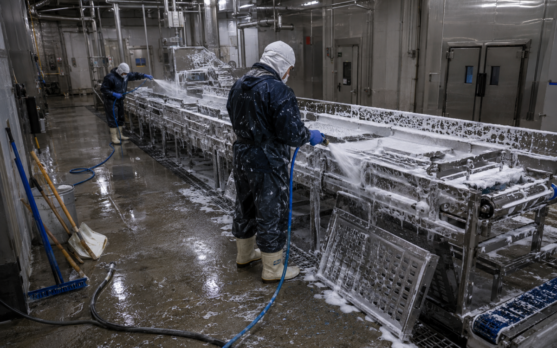
A spiral freezer is a deceptively compact piece of industrial theatre. Product enters warm enough to still carry process history and leaves as a commercial promise. Between those two points are belt behavior, airflow, evaporator condition, gearbox health, lubrication, hygiene design, defrost discipline and line balance. When something starts to drift, the freezer may not stop. It may simply become harder to live with.
That is often the more expensive phase. Operators slow the upstream line a little. Maintenance adjusts tracking. Someone notes ice buildup. Someone else blames product loading. The packaging team complains about irregular flow. Nobody calls it downtime yet, because the line is still moving.
Predictive maintenance becomes practical here when it watches the physical reality of the freezer, not an abstract asset label. Belt tension, motor load, gearbox vibration, oil contamination, bearing condition, airflow change and abnormal stop patterns all carry meaning. In slow-moving components, one sensing method may be insufficient. A technician may need vibration data for one area, ultrasound for another, and current signature analysis to see load changes linked to belt friction or ice.
The stronger frozen plants will not use this data to replace engineers. They will use it to protect engineering judgement from being buried under emergencies. A good warning, raised early enough, lets a team choose the stop, prepare the part, protect the cleaning window and avoid turning a maintenance job into a production incident.
Packaging lines hide their losses in plain sight
The loud breakdown gets attention. The quiet packaging fault often gets absorbed into the shift. A flow-wrapper misfeeds. A bagger complains about film tension. A labeler throws intermittent errors. A carton erector jams after changeover. A checkweigher rejects product for reasons that move between machine, operator and material. Each stop is small enough to ignore. At the end of the week, the lost time is no longer small.
This is one of the better arguments for predictive maintenance in frozen food, because packaging is where product reliability meets retail reality. The freezer may have done its job, the recipe may be correct, the QA release may be clean. None of that helps if the line cannot pack, label and case the product at the speed promised to the customer.
Packaging machinery is also where maintenance culture is tested. Plants often normalize repeated micro-stops because they are not as frightening as a compressor trip or a freezer failure. They become part of the shift vocabulary. “That machine always does that after lunch.” “It hates that film.” “It runs better with the old operator.” These comments are not gossip. They are data, if someone has the discipline to capture them.
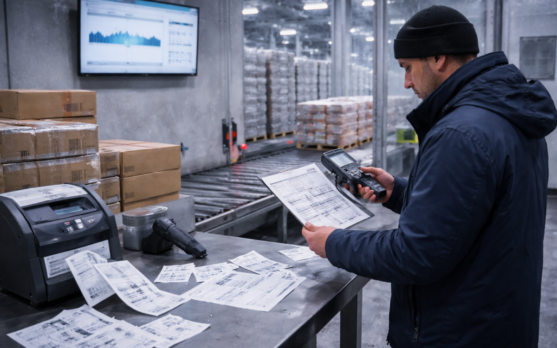
The more mature use of predictive maintenance will connect sensor data with stoppage reasons, maintenance history, changeover records and operator observations. A dashboard showing vibration is useful. A system that links that vibration to recurring misfeeds, film changes and work orders is far more useful.
AI is not the maintenance strategy
There is a danger in letting AI dominate the story. In a factory, the model is only as good as the asset hierarchy, the failure history, the sensor placement and the willingness of the team to act before a failure becomes visible. Many plants already have data. They have SCADA records, refrigeration controls, CMMS notes, alarm histories, energy data, Excel sheets, supplier service reports and the memory of technicians who know which line behaves badly in humid weather.
The gap is not always data volume. Often it is data usefulness.
A predictive system that produces too many alarms will be ignored. A system that cannot explain why it is concerned will be distrusted. A system that sits outside the maintenance workflow will become another screen in a room already full of screens. The useful version is less glamorous. It turns weak signals into maintenance priorities. It pushes the right issue into the work order system. It helps decide whether an intervention can wait until sanitation, the weekend, the next changeover or the next planned stop.
Food manufacturing adds another layer. Any maintenance action must live with hygiene, allergen control, QA release, foreign body risk, labor availability and retailer demand. A predictive alert that arrives without this context is not a decision. It is only a warning.
Reliability will become part of the buyer conversation
Frozen food buyers rarely ask suppliers about vibration sensors. They ask whether the product will arrive on time, at specification, with the right shelf life, at the right cost, through a supply chain that does not embarrass them. Maintenance is hidden inside that promise.
That may change in a subtle way. As retailers and foodservice operators push for tighter supply assurance, manufacturers with stronger asset visibility will have a better operational story. Not a marketing story. A practical one. They will know which lines are fragile, which freezer has drift risk, which packaging asset is eating margin, which spare parts deserve capital, and which maintenance stop should not be postponed to protect a short-term production target.
By the end of this decade, predictive maintenance in frozen food is likely to become less about “AI projects” and more about disciplined reliability systems. The early adopters will focus on critical assets first: refrigeration, major freezers, high-speed conveyors, primary packaging, case packing, palletizing and utilities. The better operators will resist the temptation to sensor everything at once. They will begin where a failure would hurt product, energy, labor and customer trust at the same time.
The commercial edge will not come from having the most digital plant tour. It will come from knowing earlier, acting cleaner and wasting fewer shifts on failures that had already started talking.