A frozen plant does not usually fail in a spectacular way. It loses five minutes at a checkweigher, another ten around a tired case packer, a half-hour after sanitation, a shift of confidence when the cold store is full and dispatch is waiting. Automation is entering frozen food through these small cracks first, not through science-fiction factories, and the companies paying attention are no longer asking whether machines look modern. They are asking whether the plant can hold margin when labor is tight, energy is volatile, hygiene rules are stricter, insurance is less forgiving and customers want cleaner data on every case.

Frozen food has reached the point where manual flexibility is becoming expensive
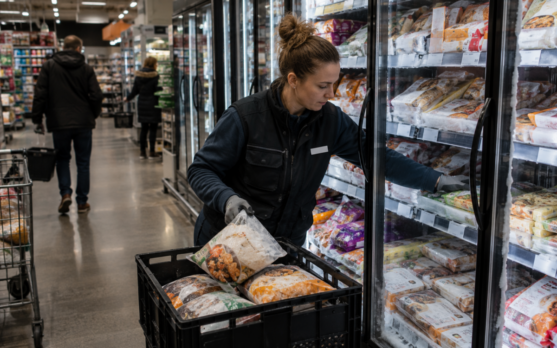
Manual work has always given frozen food a kind of rough flexibility. A good team can recover a bad pallet, clear a packaging jam, adjust to a difficult SKU, move stock across a freezing room, cover for a late truck and still get the retailer loaded before the cutoff. The industry has lived on that flexibility for decades.
But the cost of that habit is rising. Freezer work is hard to staff. End-of-line packing is repetitive. Mixed-case picking is tiring. Sanitation needs discipline at the worst time of the day, when the production run is over and everyone wants the line back. In a plant making frozen meals, pizza, potato products or prepared vegetables, the weak points rarely announce themselves as strategy. They show up as waiting tubs, softening product, rework, overtime and another call from a customer asking why the load is short.
Automation is being pulled into frozen food because the old buffers are thinner. Retailers want more availability with less inventory slack. Foodservice buyers want reliable delivery even when demand jumps. Private label programs are less patient with variation. At the same time, producers are dealing with ingredient cost, wage pressure, higher service expectations and more complex SKU mixes. The factory floor has less room for improvisation.
That does not make every robot a good investment. Frozen food has too many difficult formats for that easy answer. Sticky coatings, irregular pieces, frozen bakery shapes, bags that behave badly in cold rooms, cartons that crush under the wrong pressure, sauces, crumbs, ice, frost. The business case sits in choosing where variability is costing money and where a controlled machine cell can remove it without creating a more expensive problem downstream.
The economics are moving from speed to uptime
The most fashionable automation pitch still talks about speed. Faster picking, faster palletising, faster inspection, faster loading. Speed matters, of course. A frozen plant with a bottleneck before freezing or packing is a nervous place. Product waits where it should not wait. People start making local decisions. Quality teams get pulled into arguments that should have been avoided by better flow.
Still, the stronger economic word is uptime. Frozen food does not reward short bursts of brilliance if the system is fragile. A line that runs beautifully for three hours and then stops badly can damage the whole shift. A case-packing cell that cannot handle a changeover without drama will eat its own savings. An automated warehouse that looks efficient on the tour but cannot recover quickly from a crane fault will teach customers to build in distrust.
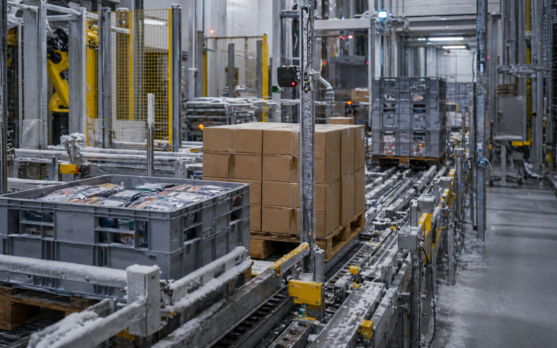
The better automation projects are measured in minutes not lost. Less time waiting for labor to arrive. Less time correcting pallet patterns. Less time clearing reject piles. Less time restarting after cleaning. Less time chasing batch records when a customer asks a simple question. These are plain industrial minutes. They do not sound visionary, but they are the minutes frozen food companies buy when they invest well.
That is why the current pressure around frozen margins matters. Large frozen companies have been reporting the kind of cost and execution pressure that makes productivity less optional. Nomad Foods has faced supply-chain inflation and margin strain. Lamb Weston has been public about cost savings, manufacturing discipline and a sharper focus on capital returns. These examples are not automation stories by themselves. They are reminders that the frozen category is operating in a financial climate where lost time, weak execution and excess handling are harder to bury.
Hygiene is becoming a design issue, not just a cleaning routine
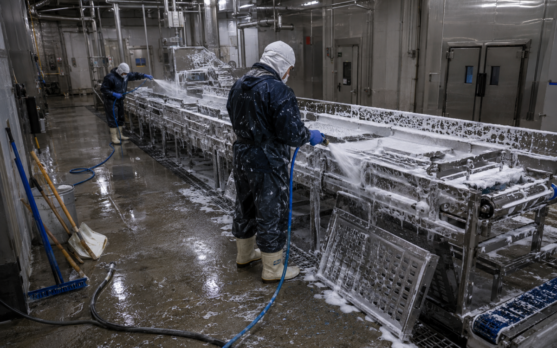
Food plants have always talked about hygiene. Automation changes the conversation because the machine either helps sanitation or fights it every night. There is no middle ground for long.
A robot arm in a dry secondary-packaging area is one thing. A complex automated cell near exposed product, coatings, fillings, toppings, potato fragments or bakery residues is another. If guards are awkward, if cables trap debris, if surfaces hold water, if access panels are slow to remove, the equipment becomes a cleaning problem wearing a productivity label. The maintenance team knows this before the board does.
The best suppliers understand that hygienic design is now part of the payback calculation. Stainless construction, drainage, chemical resistance, access, tool-free removal where possible, cleanable belts, sensible cable routing, validation records, sanitation documentation. These details decide whether an automated line gives the plant a steadier morning start or another negotiation between operations, QA and engineering.
Frozen food has its own twist. Low temperature can create a false sense of comfort. Cold slows some risks, but it does not excuse poor design, weak cleaning or bad records. Ready meals, prepared vegetables, frozen bakery and coated products all carry different hygiene realities. A plant that automates without thinking through sanitation may gain labor efficiency during production and lose it back in cleaning time, audit stress and product holds.
The freezer is now an energy asset
Cold is the invisible cost in every frozen operation. It sits in the walls, the floor, the blast freezer, the evaporators, the door discipline, the defrost schedule and the warehouse layout. Automation can reduce waste in that system, but only when the whole operation is designed as one piece.
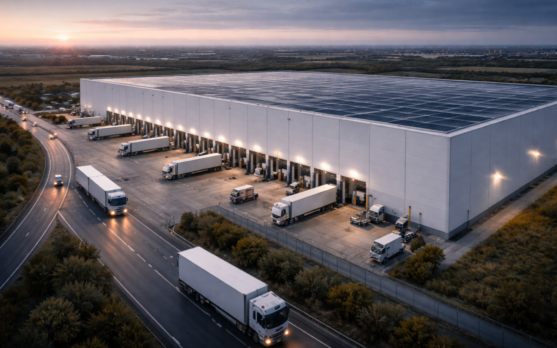
A dense automated cold store can use space better than a conventional freezer. A high-bay ASRS can place more pallets into a tighter cube, reduce forklift movement and limit unnecessary door openings. Better scheduling can help align production, freezing, picking and dispatch. Sensors can spot drift earlier. Energy systems can be run with more intelligence when the warehouse and the plant are not behaving like separate businesses sharing a yard.
There is a catch. Automation also adds load. Conveyors, shuttles, drives, cranes, vision systems, controls, compressed air, scanners, servers and maintenance access all have to be powered and protected. A freezer full of machines is not automatically an efficient freezer. It becomes efficient when movement, refrigeration, building envelope, software and people are engineered together.
That is where some projects will disappoint. They will buy automation as a department-level upgrade, then discover that energy behavior, maintenance windows and product flow were never properly aligned. Frozen food is unforgiving here. A machine that improves one metric while making the cold system nervous is not a strategic win. It is a new source of cost with better lighting.
Insurance and fire risk are moving into the automation discussion
Few sales decks spend much time on fire engineering. They should.
Automated cold storage changes the risk picture. High racking, dense pallets, stacker cranes, shuttle systems, sensors, cable runs, battery equipment, restricted access and deep integration with warehouse software create a more concentrated asset. If it works, it is powerful. If it fails badly, the interruption can be ugly. A cold-store fire is not only a building event. It can become a product loss, a customer-service failure, a transport problem, a claims problem and a capacity shortage all at once.
Insurers are not blind to that. They will care about suppression design, detection, maintenance evidence, access routes, business continuity plans and the way the automation system behaves during an incident. Oxygen reduction systems may suit some sealed automated freezers. Sprinklers, detection and hybrid strategies will suit others. The wrong answer is to treat fire protection as a late-stage technical approval after the logistics concept has already been sold internally.
This is one of the least glamorous parts of automation economics, and one of the most important. A plant manager can explain a slower payback. It is much harder to explain a system that saves labor for two years and then leaves the company with a long business-interruption fight after a preventable design weakness.
Data is becoming the operating memory of frozen food
Automation without data discipline is only expensive choreography. The machine moves, but the business still does not know enough.
Frozen food needs data that follows the product through line, shift, batch, pack, inspection, pallet, cold store, dispatch and customer. The pressure is coming from more than regulators. Retailers and foodservice groups want confidence. A buyer wants to know that a supplier can answer quickly when something goes wrong, not after three departments rebuild the story from spreadsheets and phone calls.
The move toward richer product data, 2D barcodes and stronger traceability expectations will push frozen food in that direction. Some of the impact will be visible at retail. More of it will sit upstream, in the dull but valuable connection between MES, WMS, QA records, inspection systems, pallet IDs and dispatch data.
The strongest automation projects will make the plant easier to read. They will show where yield is leaking, which SKUs cause stoppages, which shifts struggle after sanitation, where temperature excursions begin, where packaging defects repeat and how quickly the business can isolate affected stock. That is not digital theatre. It is operational memory.
Over the next few years, the gap will widen between companies that own their process data and companies that merely collect fragments. A robot can palletise badly specified data as efficiently as good data. A smart freezer can store the wrong priorities with great discipline. The management layer still matters.
The automation divide will be managerial
The next phase in frozen food automation will not be decided only by who buys the most advanced equipment. It will be decided by who can manage the system after the installation team leaves.
Short term, most investment will remain practical: end-of-line automation, palletising, case handling, inspection, cold-store ASRS, predictive maintenance, sanitation-ready equipment and better warehouse execution. Brownfield factories will move in pieces because floor space, legacy lines and production schedules do not allow clean reinvention.
Medium term, the more serious divide will be data and uptime. Plants that know their downtime by cause, line, SKU and shift will spend better. Cold stores that can explain recovery routes and service continuity will sell more than pallet positions. Suppliers that can prove traceability quickly will have a different conversation in private label and foodservice tenders.
Longer term, automation may make the frozen food industry look less manual, but the bigger change will be less visible. The best operators will run colder, tighter and with fewer surprises. The weaker ones will own more machinery than discipline.