An all-natural frozen pastry makes its promise long before anyone tastes it. The words sit neatly on the pack: no artificial preservatives, no artificial colours, no artificial flavours, real butter, real fruit. Then the product goes through the less romantic part of the business: industrial mixing, freezing, pallet movement, temperature variation, store handling, bake-off and the first bite from a customer who does not care how difficult the claim was to protect.
The natural claim carries more risk than it looks
All-natural is a stronger commercial signal than clean label. Clean label can mean a shorter list, friendlier ingredient names or fewer additives that make shoppers hesitate. Natural goes further in the consumer’s mind. It suggests restraint. It suggests honesty. It suggests that the product has stayed close to bakery ingredients people recognise.
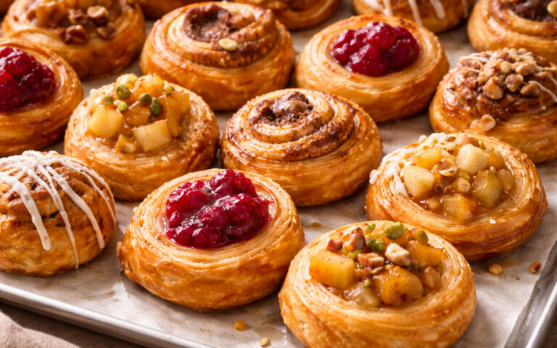
That makes the claim attractive in frozen pastries, especially in premium breakfast, family snacking, weekend treats and foodservice bake-off. It also makes it dangerous. A croissant with a natural claim is judged differently from a standard frozen pastry. A fruit turnover with no artificial preservatives invites the buyer to look harder at the filling, the glaze, the colour and the shelf-life system. A Danish that sells itself on real ingredients cannot afford to taste flat after freezing.
The difficulty is that natural claims are often cleaner in language than they are in production. A pastry is rarely just flour, butter and sugar once it becomes an industrial frozen product. There may be fillings, toppings, glazes, chocolate pieces, fruit preparations, creams, release agents, packaging barriers and bake-off instructions. Each one can support the claim or quietly weaken it.
The best suppliers understand that all-natural is not only a marketing line. It is a discipline that begins with the ingredient deck and ends when the product comes out of the oven.
Preservation still has to be engineered
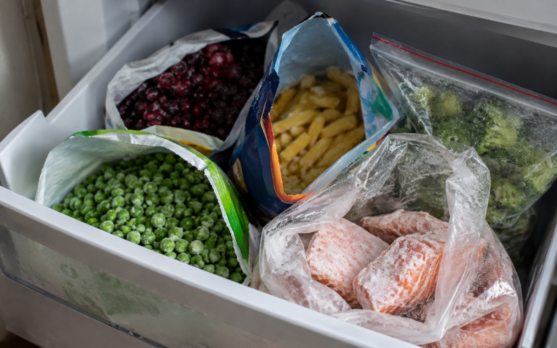
Freezing is a powerful form of preservation, but it does not remove every preservation problem. It slows the clock. It does not erase moisture migration, oxidation, filling breakdown, staling after bake-off or mold risk once the product leaves frozen storage and enters a display window, a café counter or a home kitchen.
This is where all-natural pastry gets complicated. A manufacturer can avoid artificial preservatives, but the product still needs a preservation strategy. That strategy may include fast freezing, better packaging, control of water activity, cultured ingredients, vinegar-based systems, fermented flour, sourdough elements, fruit preparation design or natural mold inhibition. None of these choices are neutral. They affect flavour, cost, texture, processing and claim language.
A vinegar note that works in bread may feel wrong in a sweet pastry. A cultured wheat system that helps shelf life in rolls may need careful balancing in laminated dough. A fruit filling with a cleaner declaration may behave well in the specification sheet and still bleed into pastry layers after weeks in frozen storage. The freezer does not solve weak formulation. It stores it until the product is exposed again.
Foodservice makes the issue sharper. A pastry may be frozen for distribution, then thawed, baked and displayed for a morning service. The natural claim has to survive that whole route. If the product dries out too quickly or loses visual appeal before the sales window closes, the claim becomes irrelevant to the operator.
The freezer exposes weak natural formulation
Frozen bakery is unforgiving because damage is often quiet. Ice formation can disturb structure. Moisture can move from filling into pastry. Fats can pick up stale or oxidised notes if the system is poorly protected. Laminated layers can lose lift. A topping can break away in the pack. A glaze can dull. None of this is dramatic in the warehouse. It becomes obvious under oven heat.
In a development kitchen, the first bake may look excellent. The better test comes later: after storage, after transport, after temperature fluctuation, after imperfect handling. A natural pastry that only performs in ideal conditions is not ready for retail or foodservice.
Butter is a good example. It is one of the most convincing natural premium cues in frozen pastry. It brings aroma, flavour and flake. It also demands process control. If lamination is weak, if temperature management slips or if the pastry is poorly protected through storage, the product can lose the very character that made the claim attractive.
Fillings add another layer of risk. Real fruit sounds better than a more engineered preparation, but real fruit brings water, acidity, colour variation and seasonal inconsistency. Nuts, chocolate and dairy fillings can raise the value perception, but they also raise cost and stability questions. A more natural deck is often less forgiving of shortcuts.
The ingredient deck is part of the product experience
In frozen pastries, the ingredient list has become part of the sale. Not every shopper reads it closely, but buyers do. Retail technologists do. Quality teams do. Export and compliance teams do. In premium own-label, the ingredient deck is often treated almost like product evidence.
That creates a practical hierarchy. A simple butter croissant can carry a natural story more easily than a pastry filled with cream, fruit, glaze and decorations. A plain puff pastry has fewer places for the claim to be questioned. A chocolate-hazelnut or fruit-topped Danish has more commercial theatre, but also more exposure.
The language should be precise. No artificial preservatives is clearer than a vague natural halo. No artificial colours or flavours gives the manufacturer a tighter promise. Real butter, real fruit, sourdough, cultured wheat or naturally fermented ingredients can all work when they are honest and technically relevant. The broader the claim, the greater the burden of proof.
There is a buyer-room scene that happens more often than suppliers would like. The sample looks good. The concept is strong. Then someone turns over the pack or opens the specification. The conversation slows. What is this glaze system? Why is the fruit preparation so long? Is that flavour natural in every target market? Can this claim run in Germany, the UK and the US? Can the supplier document the source?
Natural pastry is not only made in the bakery. It is also made in supplier paperwork.
Scale is where natural becomes expensive
At small scale, natural can feel straightforward. Use good butter. Use fruit. Avoid artificial preservatives. Keep the recipe recognisable. At industrial scale, the same promise becomes heavier.
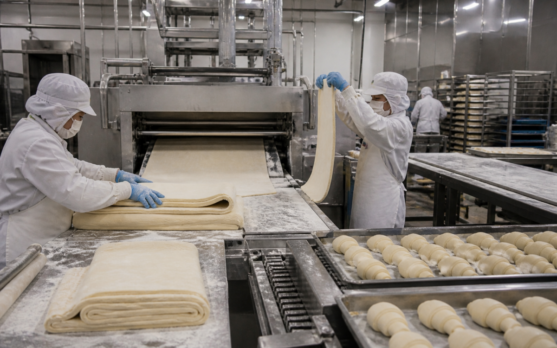
The factory needs flour with predictable behaviour. Butter or fat systems must stay consistent across batches. Fruit quality has to be controlled. Natural flavours and colours must remain stable. Packaging has to protect the product without making the cost structure unworkable. The pastry has to run on equipment, freeze cleanly, pack without damage and bake correctly outside the manufacturer’s control.
Cost pressure is always close. Real butter, fruit, nuts, chocolate, vanilla and natural preservation systems can all push the product upward. If the retailer wants a natural claim at a mainstream price, the formulation can become squeezed. The temptation is to reduce filling, weaken the butter signal, simplify the topping or use vague language to cover a product that has lost its reason to be premium.
That is where all-natural can become self-defeating. A cheaper natural pastry that eats poorly does not build trust. It only teaches the customer to be sceptical of the claim.
International scale adds another layer. Natural is not interpreted in exactly the same way across markets. A claim that feels ordinary in one country may need legal review in another. Suppliers serving multiple retailers and regions will have to become more careful with front-of-pack language, ingredient sourcing and documentation.
The future belongs to specific proof
The broad natural claim will not disappear, but it is likely to become more disciplined. Retailers and manufacturers will lean more heavily on specific, defensible promises: no artificial preservatives, no artificial colours, no artificial flavours, real butter, real fruit filling, sourdough-based, naturally fermented, cultured wheat protection, simple ingredients.
Short term, expect more work around preservation systems that sound acceptable to consumers and still give manufacturers enough shelf-life protection. Cultured wheat, vinegar-based blends, fermented ingredients and packaging improvements will keep moving into bakery development conversations. Some products will carry the claim well. Others will discover that natural preservation is not a drop-in replacement for conventional systems.
Over the next few years, the strongest all-natural frozen pastries will probably be the ones with simpler architecture: butter croissants, fruit turnovers, cleanly built Danish pastries, premium puff pastry and selected bake-off products where the ingredient deck can stay coherent. Highly decorated pastries with multiple fillings and toppings may still succeed, but they will need much tighter technical work.
Longer term, the commercial language may become less romantic and more exact. Natural will still matter, especially in premium and family-oriented products, but buyers will ask for proof that the claim survives scale. The pack can start the conversation. The freezer, the truck, the oven and the first bite will finish it.