Steam & Sustain — Heat, Energy, and the Next Era of Potato Processing
In potato processing, steam isn’t background noise — it’s the quiet engine running every shift. You find it in the blanchers, curling off fryers, humming through the cleaning lines. For decades, the goal was to keep it steady and forget about it. That’s no longer enough. Now, how you generate, manage, and reuse that heat is becoming one of the sharpest competitive levers in the industry.

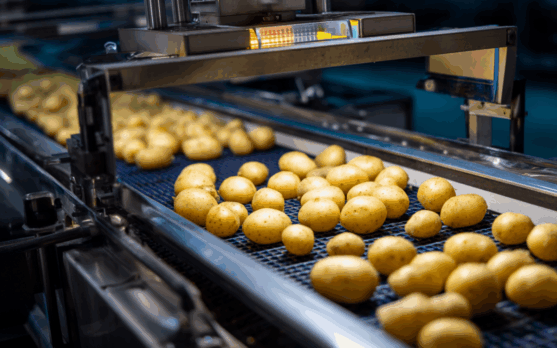
Walk into a potato processing plant before dawn and you’ll feel it before you hear it. The floor is still cold underfoot, the air sharp with the faint tang of starch and steel. Then a hiss cuts through, valves turning, pressure building. Steam threads its way into every corner, not as a cloud, but as a pulse. It’s in the blanchers, the peeling stations, the sterilizers — all working long before the first truckload is tipped.
Once, steam was treated as an endless utility. If the gauges stayed in the green, you left it alone. Now, with energy markets shifting and sustainability targets creeping into supply contracts, steam is getting more attention than the latest fryer or freezer. The smartest plants treat it like money in vapor form — track it, store it, spend it wisely.
I saw this in practice at a mid-sized facility in Northern Europe. Their boiler room wasn’t the hulking, oil-smelling cave you might picture. It was spotless, half the footprint of older designs, with touchscreen panels glowing in the dim light. One engineer ran a finger across the chart — a week’s worth of data: sharp climbs at start-up, shallow valleys at changeovers, a flat line during an unexpected downtime. “Every dip is a story,” he said. “Sometimes it’s good news. Sometimes it’s a leak.”
The big shift isn’t just in generation — it’s in recovery. In one Canadian plant, the hot water from the final blanch cycle now flows straight into the first wash stage. No cooling in between. No reheating. That single loop shaved their gas bill by double digits. Another site pulls exhaust heat off fryers and channels it into water heating for winter sanitation shifts. It’s a patchwork of gains, but over twelve months, those patches form a quilt you can measure in real savings.
Automation has slipped into the picture too. Where operators once worked by habit — “give it a bit more steam here,” “ease it off there” — now sensors handle the micro-adjustments. A fraction of a degree in water temperature, a tiny tweak in conveyor speed, an early shut-off when demand drops. On paper, those changes look trivial. On a balance sheet, they can mean thousands in fuel and maintenance avoided.
Water use runs parallel to steam. The less water you heat, the less steam you need. Some plants have replaced open-drain blanchers with closed-loop systems, adding filtration so the same water runs cleaner and hotter for longer. That means less strain on the boilers, fewer scale deposits in the heat exchangers, and better consistency in the product itself. It’s one of those changes that starts as an environmental target and ends up being a quality win.
Even the packaging hall is feeling the shift. A factory in the Midwest replaced a scattering of electric heaters with a single steam-fed radiant system. The operators didn’t care about the energy math; they cared that their hands didn’t freeze between cases. But the finance team noticed the winter bills drop, and that was enough to keep the system running.
Of course, the work isn’t all gleaming dashboards and perfect heat loops. Retrofitting old plants is a slow, stubborn business. Piping diagrams from the 1980s, valves that no one’s touched in twenty years, space where there should be clearance. Some of the quickest wins come not from new tech but from discipline: insulating every reachable joint, fixing steam traps before they seize, walking the line with an infrared camera and a sharp eye.
There’s also a growing shift in how energy performance is talked about outside the plant walls. A decade ago, a buyer might never ask how you heated your blanchers. Now, big retail groups and QSR chains want energy and carbon data as part of the price conversation. Miss their benchmarks, and you’re not just burning gas — you’re burning contracts.
Looking ahead, hybrid systems are making their way into trials. Gas-fired boilers paired with electric steam units fed by wind or solar output. Flip the load depending on the market or the weather. It’s a flexibility play, but it’s also a hedge against the next spike in fuel prices.
In the end, steam in potato processing is no longer invisible. It’s as much a product as the fries or flakes moving down the belt. If you can generate it cleaner, move it smarter, and use it twice before it disappears, you’re not just saving money — you’re proving you can keep promises in a market where certainty is rare.
Part of the series: ROOT REVOLUTION Series Overview
Explore the full editorial series.
- 01: Tuber Tomorrow — Market growth, shifting geographies, and the race for efficiency.
- 02: Steam & Sustain — How steam recycling is reshaping plant efficiency.
- 03: Freeze Precision — Rethinking Cold in Potato Processing.
- 04: Genome Crunch — Breeding the potato for taste, resilience, and transport.
- 05: Packaging Talk — Smart labels, greener wraps, and consumer trust.
- 06: Factory for the Neighborhood — Micro plants and local supply innovation.
- Bonus episode: Snack Culture Shock — How viral culture is changing potato products forever.
Conclusion
In potato processing, the quiet hiss of steam is becoming the sound of strategic advantage. Plants that master its flow aren’t just efficient; they’re more resilient, more credible, and better prepared for whatever the energy market throws at them next.
Essential Insights
Managing steam as an asset — not an afterthought — cuts costs, protects uptime, and strengthens supplier credibility.