1 July 2026 Changes the QA Game: Listeria, Shelf-Life Proof and the End of Hope-Based Compliance
For years, too many ready-to-eat producers lived with a comfortable fiction. If release testing looked acceptable, if historical results were mostly calm, and if nobody had a major incident lately, then the shelf life was treated as more or less defensible. From 1 July 2026, that mindset starts looking dangerously old. The new reality is harsher and, frankly, more honest. For ready-to-eat foods that can support Listeria monocytogenes growth, the question is no longer whether the product looked compliant when it left the factory. The question is whether the producer can prove, with real scientific support, that it stays compliant until the very end of shelf life. That is a very different standard. It changes what QA teams must document, what HACCP teams must validate, what labs must deliver, and what commercial teams can still promise without wandering into fantasy.
This is not just a tighter rule. It is a different regulatory philosophy.
The easiest way to underestimate the 1 July 2026 change is to treat it as another technical adjustment to microbiological criteria. It is more than that. It is a shift from spot reassurance to evidence-based control across time. In practical terms, the old comfort zone was a product that looked acceptable at release, backed by habit, precedent, and a certain amount of institutional optimism. The new standard asks a harder question: can you actually demonstrate that the product will remain within the relevant Listeria criterion until the end of its labelled life under reasonably foreseeable conditions?
That sounds simple when written in a regulation. It becomes much less simple in a chilled or frozen-ready-to-eat operation where shelf life, formulation, post-process exposure, environmental contamination risk, temperature abuse, and real-world handling all start colliding with each other. This is why the change matters. It does not just pressure testing. It pressures the entire logic by which shelf life is set, justified, and defended.
The real shift is from "we test" to "we can prove"
That distinction is where many operators will feel the pain first. Testing still matters, of course. But testing alone is no longer an impressive answer when the underlying question has changed. A compliant result at one point in time is not the same as a scientifically defensible claim about the whole life of a product. The Commission's updated guidance makes that painfully clear. If an RTE food supports Listeria growth and the food business operator cannot satisfactorily show that the product will stay below 100 cfu/g throughout shelf life, the default expectation becomes the tougher route: not detected in 25 g throughout shelf life.
That is a brutal line, but it is also clarifying. It means that shelf life is no longer something a business can lightly inherit from a previous product, a past practice, or a commercial target. Shelf life becomes a microbiological claim that has to be earned. And once you see it that way, a lot of current industry behavior starts to look uncomfortably underpowered.
Why this lands hardest in RTE, and why some frozen operators still should not feel too relaxed
The obvious heat is on chilled ready-to-eat foods and on any RTE category that can support growth and does not get a meaningful kill step after the point at which contamination could occur. That includes exactly the kinds of products that have long made QA teams nervous for good reason: exposed post-lethality meats, certain fish and seafood lines, some dairy products, certain vegetable-based RTE formats, and any product where contamination risk survives into the marketed product and the product is genuinely intended to be eaten without a further effective kill step.
Frozen producers should not assume they are safely outside the blast radius just because the category word "frozen" sounds colder and cleaner. Many frozen products are clearly non-RTE because they require full cooking before safe consumption. Those are a different case. But some frozen and frozen/chilled crossover formats live in murkier territory: ready-to-eat components, thaw-and-serve items, prepared foods with mixed consumer use patterns, or products whose labelling and marketing can drift into ambiguity. The Commission guidance is quite pointed on this. Product classification and labelling need to be coherent and realistic. A business does not get rescued by a formal instruction if everything else around the product nudges consumers toward eating it as supplied.
That means one of the first consequences of the new regime will not be laboratory work alone. It will be a deeper internal argument about what a product really is. Some producers will discover that their weakest point is not their enumeration result. It is the story they have been telling themselves about whether the product is RTE at all.
The shelf-life file is becoming a legal-defense file
This may be the biggest cultural change of all. In too many businesses, the shelf-life document has sat somewhere between technical support paper and commercial compromise. It existed, it was filed, and most of the time it was not forced into daylight unless something went wrong. That posture is becoming harder to defend.
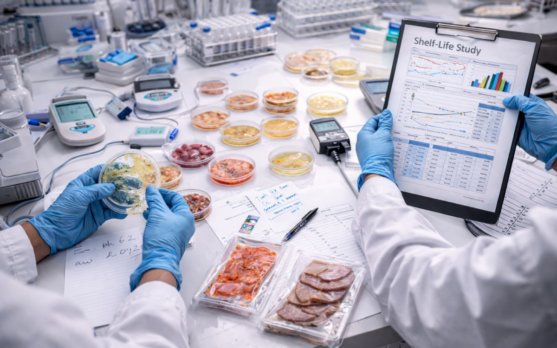
Under the updated guidance, the support dossier for Listeria-related shelf-life decisions needs to look much more like a real scientific case. That means detailed product description, clear RTE status, processing parameters, packaging details, storage conditions, distribution assumptions, instructions for use, relevant physicochemical data, literature support where appropriate, predictive microbiology where appropriate, challenge testing where needed, durability studies where useful, and a logic that actually holds together when an authority reads it with a skeptical mind.
That last point is worth dwelling on. A dossier is not a pile of documents. It is an argument. And a weak argument hidden inside a thick file is still a weak argument.
Challenge tests are about to become a lot more politically important inside companies
One of the reasons this new phase will hurt is that it upgrades the status of challenge testing from useful specialist tool to something much closer to strategic evidence. The updated Commission guidance and the latest EURL technical document do not say every product automatically needs the same study package. But the direction is clear enough. Predictive models and experimental challenge studies are preferred for validation. Durability studies are valuable, especially for verification and for reflecting naturally contaminated product under more realistic conditions, but they are not the same thing as a robust validation strategy.
That distinction will matter in budgets, timelines, and internal power dynamics. Commercial teams prefer long shelf life. Operations teams prefer stability. QA teams prefer proof. Up to now, proof has too often been the thing everyone applauds until it threatens the launch date. From mid-2026 onward, proof gets harder to push aside because the fallback position is no longer commercially comfortable. If you cannot support the 100 cfu/g logic convincingly, you are pushed toward the much tougher "not detected in 25 g" expectation throughout shelf life. Suddenly, the cost of not doing the harder science looks much higher.
That is exactly where more businesses will start shortening shelf life, reformulating, tightening process controls, or redesigning how they define the product. Not because the regulation explicitly tells them to slash days from the label, but because once the evidential burden becomes real, some existing shelf lives will start to look more aspirational than defensible.
Environmental monitoring just moved from good practice to strategic proof support
Listeria has always been a pathogen that punishes superficial cleanliness. It hides in niches, survives in damp zones, returns through traffic and equipment, and embarrasses teams that mistake surface tidiness for control. None of that is new. What changes now is how directly environmental control feeds into the credibility of the shelf-life argument.
The Commission guidance is blunt enough on this point: a robust environmental monitoring programme should be a key component of the food safety management system, and manufacturers of RTE foods that may pose a Listeria risk must sample processing areas and equipment as part of their scheme. That matters because a shelf-life claim without credible process-environment control starts to look fragile very quickly. A business cannot persuasively say, "we know this product will behave," while struggling to explain where Listeria may be living in the plant and how post-process contamination is being prevented or detected.
So the future argument inside factories is likely to become more integrated. Shelf-life validation, environmental monitoring, hygienic zoning, traffic control, packaging integrity, temperature realism, and process discipline will increasingly be treated as one conversation rather than separate QA workstreams with separate owners. That is healthy. It is also going to expose weak operators faster.
The products under the most pressure will be the ones that looked commercially attractive under the old logic
There is a quiet irony here. The products that may feel this change hardest are not necessarily the most exotic ones. They are often the commercially attractive middle-ground products: long enough shelf life to support distribution, convenient enough to fit modern eating habits, exposed enough to carry post-process risk, and "stable enough" only if nobody asks too many questions. Those products have done well in the old model precisely because the system tolerated a degree of comfort-based confidence.
That confidence will now be stress-tested. Some product families will probably prove more robust than critics expect. Others will turn out to have been living on borrowed credibility. This is especially likely in chilled RTE where a few extra days of commercial life have historically felt valuable, but where microbiological certainty across those extra days can be much harder to defend than the spreadsheet made it appear.
That is why the smarter businesses will not frame this as a compliance problem only. They will treat it as a portfolio problem. Which products still make sense once the evidence burden is taken seriously? Which ones need reformulation? Which ones need process redesign? Which ones need a shorter life? Which ones should never have been classified the way they were? These are not lab questions alone. They are product strategy questions wearing a microbiology badge.
The businesses that cope best will be the ones that stop treating shelf life as a sales promise first
Over the next year or two, the market is likely to separate into two kinds of operators. The first group will be those that genuinely understand their products as living microbiological systems. They will tighten dossiers, refine validation logic, improve environmental programmes, use predictive tools more intelligently, and accept that not every commercially attractive label claim can survive scientific scrutiny. They may suffer some friction now, but they will build a sturdier operating model.
The second group will be those that keep trying to defend yesterday's shelf life with today's paperwork. They will lean too heavily on historical data, treat durability work as if it were full validation, hope that classification ambiguity gives them breathing room, and discover too late that authorities are no longer interested in hope dressed as evidence. Those businesses may not collapse overnight. But they will start to feel regulatory and commercial pressure in much more uncomfortable ways: more questions, more rework, more defensive documentation, more shelf-life compression, and less room to improvise.
If there is a wider prediction worth making, it is this: QA is about to gain more influence over portfolio architecture. Not because QA suddenly became fashionable, but because the regulatory logic now reaches into product design, process choice, labelling, packaging, and realistic market life. In other words, microbiological proof is no longer just a gate at the end. It is becoming one of the forces that shapes what gets built in the first place.
The deeper message is not about fear. It is about maturity.
It would be easy to make this topic sound dramatic in a cheap way. A new rule. A dangerous pathogen. A hard deadline. But the more interesting truth is calmer than that. The regulation is not demanding perfection. It is demanding adult-level evidence. It is asking producers of higher-risk RTE foods to do what the industry has often claimed it was already doing: understand the product, understand the risk, and support shelf life with a real scientific basis.
That is why the deadline matters beyond legal compliance. It marks the moment when shelf-life hope becomes much harder to sell as shelf-life proof. For the better operators, that will be uncomfortable but manageable. For weaker ones, it may become the moment when the whole quality system is forced to show whether it was genuinely built on knowledge or mostly built on confidence.
Conclusion
From 1 July 2026, the strongest ready-to-eat producers will no longer be the ones with the neatest release result or the longest inherited shelf life. They will be the ones that can demonstrate, coherently and scientifically, why their product stays compliant until the final day it is sold and consumed. That is a sharper standard, but also a healthier one. It pushes QA away from theatrical reassurance and toward evidence that can survive official scrutiny. For frozen and chilled RTE producers, that is the real change in the game: shelf life is no longer something you announce. It is something you have to prove.
Essential Insights
The 1 July 2026 shift is not mainly about more testing. It is about stronger proof. If an RTE food can support Listeria growth, the winning operators will be the ones that can defend shelf life with a real evidence chain, not just a clean release sample and a hopeful label.