Automation Is Not the Whole Story: Fire and Insurance Are the Hidden Cost Curve in Cold Storage
Everyone loves the clean part of the automation story. More density. Less labor pressure. Faster throughput. Better space economics. Sharper data. Smoother fulfillment. That is the version that shows up in investor decks and conference slides. The harder version usually arrives later, when the project is already emotionally sold and the awkward questions finally start circling the table. How much water do we actually need? What happens when lithium-ion vehicles, plastic totes, and deep storage arrays meet a real fire scenario? How does the insurer view this layout? What does recovery look like after a serious incident? And how much of the real cost curve is about to move from software and mechanics into fire engineering, compliance, business interruption, and risk premium? In cold storage, that hidden curve is starting to matter a lot more than many teams expected.
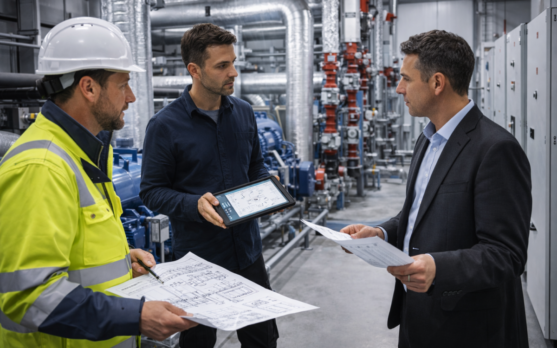
The easy automation story is starting to collide with the hard physical one
For a while, cold storage automation could be discussed almost like a pure productivity project. If labor was tight, throughput mattered, and land was expensive, dense automation looked like a powerful answer. In many ways, it still is. But there is a difference between a project that works on paper and a project that remains resilient, insurable, and financially coherent once the fire engineer, the broker, the carrier, and the loss-prevention team fully enter the room.
That is where the conversation changes tone. Suddenly, the question is no longer just whether the system can move pallets or totes beautifully. The question becomes whether the facility can detect, control, access, fight, contain, and recover from a fire in a highly automated environment where access is difficult, visibility is poor, plastics are abundant, and battery-powered machines may be part of the problem.
That shift matters because it changes where the real money sits. A project team may think the painful line items are robotics, controls, integration, and commissioning. Then the fire-protection design matures, the water-demand assumptions harden, underwriting comments start coming back, and the hidden cost curve finally shows itself.
Cold storage does not cancel fire risk. It rearranges it
There is still a surprisingly persistent myth that a cold warehouse somehow feels less flammable because the product is cold. That is the wrong mental model. In many frozen environments, the product itself is not the real issue. The packaging is. The pallets are. The liners are. The wraps are. The containers are. The rack geometry is. The way fire moves through a dense, obstructed, highly engineered space is.
And cold adds its own complications. Water does not behave the same way in a freezing environment. Wet systems are not the easy answer. Dry-pipe and preaction strategies bring their own costs, delays, maintenance realities, and coordination headaches. Add dense automation and the design stops being a simple code exercise. It becomes a negotiation between storage geometry, suppression logic, refrigeration equipment, ceiling height, flue space, material choice, charging zones, and operational practicality.
That is why so many teams underestimate this risk. They think they are designing a faster warehouse. In reality, they are also designing a much more specific fire problem.
The hidden enemy is not only the robot. It is the combination
One robot does not make a warehouse uninsurable. One plastic tote does not do it either. One battery charger does not do it. What changes the risk picture is the stack.
Dense ASRS. Narrow aisles. Tall buildings. Deep storage arrays. Plastic containers. Battery-powered shuttles or mobile equipment. Charging infrastructure. Limited internal access. Reduced visibility. Harder manual intervention. Slower suppression logic in freezing environments. More difficult final extinguishment. Longer recommissioning.
Each element on its own can sound manageable. Together, they create a very different underwriting conversation from the one many owners expect when they are still looking at automation as a productivity purchase.
That is the real editorial point here. Automation in cold storage is not just a machinery decision. It is a system-level risk decision. And system-level risk is exactly what boards tend to underprice when the operational upside is more visible than the downside.
Insurance is where the fantasy usually meets reality
A lot of automation projects are still budgeted as if insurance will more or less adapt around them. Sometimes it does. Sometimes it adapts expensively.
Insurers do not just see a sleek automated facility. They see severity. They see access constraints. They see uncertainty around fire spread, manual intervention, smoke damage, water damage, and the time it may take to restore operations after a serious event. They see the possibility that a fire does not remain a localized incident, but becomes a long, ugly recovery story with major business interruption attached to it.
That matters because premium is only one part of the equation. Deductibles matter. Capacity matters. Coverage terms matter. Business interruption assumptions matter. Engineering recommendations matter. And in some cases, the bigger issue is not what the annual premium looks like today, but whether the risk remains attractive enough to insurers as these building types become more complex.
In plain language, the cost of automation is not just the invoice from the automation vendor. It is the full price of making that asset acceptable to the people who will insure it and the people who may one day have to save it.
Lithium-ion changes the mood of the whole project
This is one of the biggest reasons the subject is moving up the org chart. Battery-powered material-handling systems and mobile automation are no longer niche details. They are central to how many modern facilities function. But once lithium-ion enters the picture at scale, the conversation becomes less forgiving.
Not because every battery system is a disaster waiting to happen. That would be lazy and wrong. The issue is that when a lithium-ion event does occur, it tends to raise questions about thermal runaway, propagation, toxic gases, reignition, cooling demand, separation, and firefighter tactics. In an already dense warehouse, that is not a minor add-on. It is a multiplier.
And multipliers are what decision-makers should fear most, because they distort everything at once. Detection strategy. Separation strategy. Charging layout. Emergency planning. Suppression assumptions. Access planning. Downtime forecasting. Insurance appetite.
The project may still make complete sense. But it stops being a clean automation story the moment batteries become operationally normal and risk-significant at the same time.
The most expensive mistake is discovering all this too late
The real pain does not always show up in a fire. Often it shows up much earlier, during design development, insurer review, FM-style engineering scrutiny, or late-stage value engineering. That is when teams realize that small physical choices can produce very large consequences.
A little more height. A different tote decision. A tighter rack arrangement. A slightly different flue condition. A different charging concept. A different commodity mix. Suddenly the suppression approach changes, the water demand jumps, the coordination becomes uglier, and the elegant spreadsheet from six months ago starts looking suspiciously optimistic.
This is why the hidden cost curve is such a strong angle. It is not only about catastrophic loss. It is also about design drift. Scope creep. Extra engineering. More coordination time. Revised utility needs. Revised protection layouts. Revised timelines. Revised insurer expectations. And yes, in some cases, a more sober conversation about whether the original density ambition was financially as smart as it looked.
The next competitive gap may be insurable density, not maximum density
That is where I think this topic gets truly interesting for decision-makers. The winning cold warehouse of the next cycle may not be the one that squeezes the most storage into the most dramatic cube. It may be the one that reaches the best balance between density, resilience, protectability, and insurability.
That sounds less sexy. It is also more useful.
There is a difference between designing for engineering ambition and designing for long-term survivability. Boards that understand that difference earlier will make better choices about layout, material selection, battery zoning, suppression philosophy, access strategy, and portfolio risk. Boards that do not may still get their beautiful automated building, but they may also inherit a facility whose real cost structure keeps rising in places that were barely discussed in the original ROI model.
In that sense, fire and insurance are no longer side conversations. They are design variables. And once they become design variables, they start influencing the real economic ceiling of automation.
This gets sharper, not softer
In the next 12 to 24 months, more cold-storage projects will discover that the difficult meeting is not the automation workshop. It is the meeting where fire engineering, water supply, insurer comments, and business-interruption assumptions collide. That is where optimistic project logic gets stress-tested.
Over the next two to five years, I expect underwriting to become more selective between facilities that were automated intelligently and facilities that were simply automated aggressively. That means more reward for early fire-engineering involvement, better segregation of higher-risk elements, more serious detection strategy, more disciplined charging layouts, and more respect for recovery planning instead of mere suppression compliance.
Longer term, I expect the language of the sector to change. Today people still talk too casually about storage density, labor savings, and automation maturity as if those metrics are enough. They are not. The more useful language will be protectable density, recoverable automation, and insurable design. Once that shift happens, the industry will stop pretending that fire protection is a late-stage technical bolt-on. It will be treated as part of the core economics of modern cold infrastructure.
What serious decision-makers should be asking now
- Are we evaluating this project as an automation investment only, or as an automation-plus-fire-plus-insurance investment?
- Do our layout, tote, battery, and charging decisions still make sense after loss-prevention review, not before it?
- Have we modeled business interruption and recommissioning realistically, or only capital cost and labor savings?
- Is our target density still attractive once water demand, suppression complexity, and insurer appetite are fully priced in?
- Are we designing the most impressive facility, or the most resilient one that capital markets and insurers will still like five years from now?
Those are not technical afterthoughts. They are board questions. Which is exactly why this topic matters.
Conclusion
The cold-storage automation boom is real, and the productivity logic behind it is real too. But the industry is moving into a tougher phase, where density and speed are no longer enough to define a smart project. The real test is whether the building remains protectable, recoverable, and insurable once the hard physics of fire and the hard math of underwriting are fully accounted for. That is the hidden cost curve. And for a growing number of projects, it may turn out to be the most important one.
Essential Insights
The next generation of cold-storage winners will not be the companies that automate the fastest at any cost. They will be the ones that understand early that robotics ROI can be eroded, delayed, or even structurally reshaped by fire engineering, battery risk, water-demand design, insurance terms, and recovery complexity.