When Organics Separation Stops Being a Bin Issue
For a long time, organics separation sat in the same corporate drawer as cleaning schedules, pest control, and whatever else happened behind the building after service hours. It mattered, technically, but not in a way that forced senior teams to rethink operations. That is changing fast. As new food-waste separation rules move from policy language into real compliance calendars, businesses are being pushed into a more uncomfortable and more useful reality: once food waste has to be separated properly, documented, collected cleanly, and kept free from contamination, the conversation can no longer stay at the level of bins and stickers. It moves upstream into forecasting, portioning, packaging, labor discipline, site layout, training, donation pathways, and whether the business actually understands what it is throwing away and why. That is the real story of the 2026 compliance wave. Not that more sites will have more containers, but that waste is being dragged out of the shadows and turned into something measurable, visible, and a lot harder to ignore.
Compliance is turning waste into an operating discipline
The first shift is structural. In many food businesses, waste used to be managed as a service contract. A hauler picked it up, finance approved the invoice, and sustainability might mention diversion rates once a quarter if someone was feeling ambitious. That model starts to wobble the moment separation becomes mandatory and contamination carries operational, reputational, or financial consequences.
Now the issue lands in more places at once. Operations care because back-of-house routines have to change. Procurement cares because packaging choices suddenly affect sortability. Sustainability cares because reported diversion means very little if the organic stream is too dirty to be processed well. Finance cares because once separate collection, rejected loads, missed pickups, labor time, and avoidable shrink all start showing up in the numbers, the old habit of treating waste as a fixed background cost stops making sense.
This is why the sharper businesses are no longer asking whether they have enough bins. They are asking a more revealing question: what in our process is creating this waste, and what in our system is making clean separation harder than it should be? Those are not the same thing, and confusing them leads to expensive theatre. Plenty of companies look compliant from ten feet away while still running a messy, wasteful operation underneath.
Better waste data is becoming the real prize
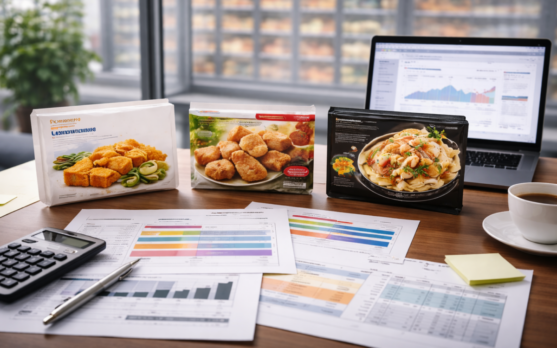
Rules may force the first move, but data is what changes the game. Once organics must be separated, businesses suddenly have a reason to know how much material is being generated by site, by shift, by department, by menu line, or by production run. That sounds obvious, but in practice many operators still rely on estimates, supplier assumptions, or the classic management method known as “roughly looks like a lot.” A deeply scientific tradition, obviously.
When measurement improves, food waste stops being one blurry category. Prep trim is not the same as overproduction. Unsold packaged product is not the same as plate waste. Spoilage is not the same as edible surplus that could have been redirected earlier. Once those streams are separated conceptually as well as physically, managers can see where margin is leaking and where prevention is realistically possible.
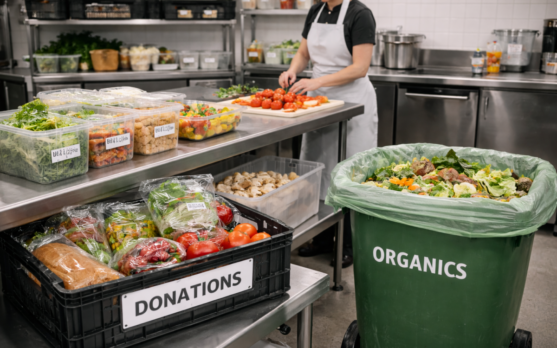
This is one reason smarter bin systems are gaining traction. Sometimes that means simple things done properly: consistent colors, clear labels, lids that reduce misuse, and waste stations designed around actual workflow instead of hopeful signage. In other settings it means fill-level sensors, exception alerts, service verification, and digital tracking that turns collection into usable operating data. The point is not gadget worship. The point is to replace guesswork with evidence.
Contamination is where many programs quietly fall apart
Most companies understand the cost of disposal. Far fewer understand the cost of contamination. That is the silent tax in organics programs, and it can eat away at performance faster than people expect.
A contaminated organic stream creates trouble at every stage. It slows collection, undermines trust with processors, raises handling costs, increases the chance of rejection, and weakens the environmental claim the program was supposed to support in the first place. The business may still be “separating organics” on paper while sending a confusing, low-quality stream into the market in reality. That is not a circular system. That is just a different flavor of inefficiency.
Food businesses are especially vulnerable because their waste streams are messy by nature. One busy shift can generate peelings, unsold prepared meals, broken bakery items, packaging scraps, gloves, labels, coffee grounds, sauce residue, and customer-facing waste that arrives already mixed. If the site design is poor, staff are rushed, or the packaging is hard to separate, contamination becomes almost inevitable. The problem then gets blamed on “people not sorting correctly,” which is often only half true. Bad systems create bad behavior with remarkable consistency.
This is exactly why contamination detection technology is becoming more attractive. Cameras on trucks, image-based audits, and AI-supported detection tools shorten the feedback loop. Instead of hearing a week later that loads were poor, operators can identify recurring mistakes near the point of generation or collection. That matters because waste systems improve when feedback is immediate, specific, and tied to a place, a routine, or a material type, not when somebody receives a generic email about “doing better.”
The smartest response starts upstream
The awkward truth is that a company can become very competent at separating waste and still be mediocre at preventing it. Clean separation is necessary. It is not the finish line.
The more valuable move is upstream prevention. Once a business has credible waste data, patterns tend to emerge with embarrassing clarity. A site overproduces on the same days every week. A promotion creates more shrink than sales lift justified. Staff trim to a cosmetic standard that customers never asked for. Date-code discipline breaks down in one part of the chain. Bulk prep routines are built for old demand patterns and nobody has challenged them in years. Waste, in other words, starts to look less like an unavoidable byproduct and more like a managerial fingerprint.
This is where the new compliance wave can actually help good operators. It creates a forcing function. To stay compliant, the business has to look harder at material flows. Once it does that, it often finds preventable loss that was already costing money long before regulation entered the chat. Better separation reveals better prevention opportunities. That may mean tighter ordering, smaller batch sizes, revised assortment logic, improved shelf-life management, clearer donation pathways for edible surplus, or packaging changes that make separation easier and contamination less likely.
What practical leaders are doing differently
The companies getting ahead of this are not necessarily the ones buying the flashiest tech first. More often, they are the ones cleaning up the fundamentals before scaling tools on top.
They standardize waste stations across sites so staff do not relearn the rules in every building.
They track causes, not just tonnage, because volume without context rarely changes behavior.
They separate edible surplus workflows from disposal workflows, so food recovery is not buried inside waste handling.
They review contamination routinely with photo evidence or visual checks, instead of waiting for a rejected load to force the lesson.
They involve operations, packaging, procurement, and sustainability together, because contamination is usually a systems problem before it is a people problem.
There is also a mindset difference. Mature operators do not treat compliance as the ceiling. They treat it as the baseline. Their question is not “How do we avoid penalties?” It is “How do we use this moment to build a cleaner, more efficient food system inside the business?” That is a very different level of ambition, and it tends to produce better economics as well as better reporting.
Why this matters beyond the waste room
Waste regulation can sound narrow until it collides with real operations. Then it touches labor, packaging, menu engineering, training, ESG reporting, and cost control all at once. That is why the 2026 wave matters. It is not just about diverting scraps from landfill, though that matters. It is about making food businesses confront the quality of their own routines.
And that may be the most useful side effect of all. Once waste is measured properly and contamination is visible, the story gets harder to romanticize. You see which locations are disciplined, which processes are clumsy, which products are routinely overbought, and where “business as usual” is quietly burning cash. The bin stops being a dead end. It becomes a mirror.
Conclusion
Mandatory organics separation is pushing the industry into a more mature phase. The easy version of the story was about adding another waste stream. The real version is about operational intelligence. Businesses that respond narrowly will spend the next few years policing bins, chasing contamination, and treating compliance like a nuisance. Businesses that respond well will use the same pressure to sharpen forecasting, simplify sorting, improve data quality, reduce preventable loss, and build waste systems that actually hold up under scrutiny. In that sense, the compliance wave is not just a burden. It is a very blunt, very practical invitation to run a better operation.
Essential Insights
The 2026 organics compliance wave is turning food waste from a disposal issue into a management issue. The winners will not be the businesses with the most bins. They will be the ones with cleaner data, simpler systems, faster contamination feedback, and stronger prevention upstream.