Phase Change Materials in Cold Storage: Enhancing Efficiency and Sustainability
In the realm of cold storage and logistics, maintaining optimal temperatures is crucial for preserving the quality of perishable goods. Recent advancements in the use of Phase Change Materials (PCMs) have opened new avenues for efficient thermal management. This article explores how PCMs are being integrated into cold storage facilities, focusing on their role in maintaining temperatures, reducing energy consumption, and addressing the challenges in implementation.
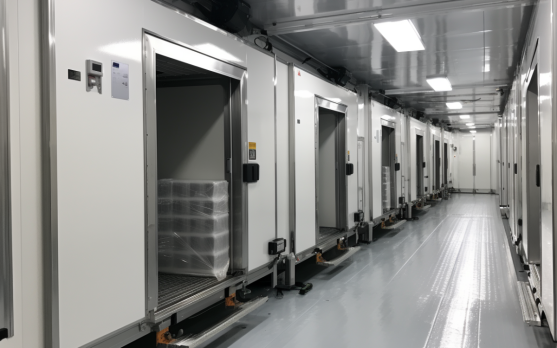
Understanding Phase Change Materials in Cold Storage
Phase Change Materials (PCMs) are substances that absorb or release heat during their transition between solid and liquid states. This unique property makes them ideal for maintaining specific temperature ranges. In cold storage, PCMs are used to stabilize temperature fluctuations, ensuring the preservation of temperature-sensitive goods such as food, pharmaceuticals, and biological samples. The ability of PCMs to maintain a consistent temperature without constant energy input makes them a sustainable and cost-effective solution for cold storage challenges.
PCMs are classified based on their phase transition temperatures and the amount of latent heat they can store or release. The selection of the appropriate PCM is crucial and depends on the specific temperature requirements of the stored goods. For example, organic PCMs like paraffin waxes are popular due to their congruent melting, chemical stability, and compatibility with a wide range of temperatures. In contrast, inorganic PCMs like salt hydrates offer higher latent heat storage but may have issues with phase separation and supercooling.
Adaptive Multi-Temperature Control in Cold Storage
One of the groundbreaking applications of PCMs is in adaptive multi-temperature control systems. These systems are designed to maintain different temperature zones within the same storage space, catering to goods with diverse temperature requirements. The use of PCMs in these systems allows for efficient thermal management, reducing the need for external energy sources. A key advancement in this area is the development of containers that utilize liquid-solid phase transitions of PCMs, providing highly effective thermal control. These containers have demonstrated remarkable stability in maintaining specific temperatures over extended periods, highlighting the potential of PCMs in complex cold storage scenarios.
Such multi-temperature control systems are especially crucial in the transportation of perishable goods and pharmaceuticals. The ability to maintain distinct temperature zones within a single container ensures the integrity and quality of diverse products during transit. This is particularly important in the context of global supply chains, where goods are transported over long distances and through varying climatic conditions.
Challenges and Solutions in PCM Implementation
Despite the advantages, the implementation of PCMs in cold storage systems faces several technical and practical challenges. One major challenge is the heat transfer issue, which arises from the need to manage temperature interactions between different storage areas. This can be addressed by enhancing the thermal insulation between zones or using advanced system designs that allow for controlled heat exchange.
Another challenge involves the physicochemical properties of PCMs. The ideal PCM should have a phase transition temperature that matches the storage requirements and possess desirable thermal properties, chemical stability, and cycling stability. Overcoming these challenges often requires the development of composite PCMs or the use of advanced materials engineering techniques. Some PCMs also exhibit inherent flaws like supercooling and phase separation, which can complicate their use in practical applications. Continuous research and development are essential to address these issues and enhance the effectiveness of PCMs in cold storage systems.
Innovative Approaches for Multi-Temperature Control
In response to these challenges, innovative solutions have been developed to optimize the use of PCMs in cold storage. One such approach is the adaptation of multi-zone temperature control systems, inspired by terraced agricultural techniques. These systems utilize PCMs with different phase transition temperatures to create distinct temperature zones within the storage space. By strategically placing goods in the appropriate zones, efficient and adaptive temperature control is achieved. This method not only addresses the challenges associated with traditional PCM-based systems but also maximizes space utilization and energy efficiency.
Impact on Energy Consumption and Sustainability
The integration of PCMs in cold storage is a significant step towards sustainability. By reducing the reliance on continuous refrigeration, PCMs lower overall energy consumption, leading to cost savings and a reduced environmental footprint. This is particularly important in the context of global efforts to combat climate change and promote sustainable practices in industrial operations.
Moreover, the use of PCMs aligns with the growing trend towards green logistics and sustainable supply chain management. By improving the energy efficiency of cold storage facilities, PCMs contribute to the broader goals of reducing greenhouse gas emissions and conserving natural resources. As the technology continues to evolve, it is expected that PCMs will play an increasingly prominent role in shaping the future of cold storage and logistics.
Conclusion
The application of Phase Change Materials in cold storage represents a significant advancement in thermal management and energy efficiency. Despite the challenges, the ongoing research and development in this field are paving the way for more sophisticated and sustainable cold storage solutions. As the demand for energy-efficient and environmentally friendly storage options grows, PCMs are poised to become a key component in the future of cold logistics and supply chain management.
Essential Insights
- PCMs offer a reliable method for maintaining consistent temperatures in cold storage, crucial for perishable goods.
- Innovative adaptive multi-temperature control systems using PCMs are enhancing the efficiency of cold storage facilities.
- Addressing the challenges of PCM implementation is key to optimizing their performance in cold storage.
- The use of PCMs significantly reduces energy consumption, contributing to the sustainability of cold storage operations.