Mini Danish and Bite-Size Pastry Assortments for Permissible Indulgence
Mini Danish assortments are having a very smart moment in frozen bakery, and not because anyone suddenly fell in love with tiny pastries for purely decorative reasons. The format is working because it solves real commercial problems in a way that feels almost effortless. A mixed box of mini pastries looks premium without looking expensive. It pairs naturally with coffee. It works for breakfast bars, hotel buffets, office platters, café counters, impulse buys and easy weekend treats. Most of all, it gives shoppers and operators the same thing at the same time: a little indulgence that still feels under control.
The format makes sense the second you see it
Some products need a long explanation. Mini Danish assortments do not. Put them next to a coffee machine and the logic is immediate. Set them on a buffet and they suddenly make the table look more generous. Drop them into a retail bakery freezer or bake-off fixture and they become one of those easy yes products, the kind customers can justify in about three seconds.
That is part of the magic here. Full-size pastries still matter, obviously. Nobody is staging a coup against the classic Danish. But large formats ask for a bigger decision. A mini pastry feels lighter before anyone even reads the label. It suggests pleasure without overcommitting. And in the current market, that matters a lot.
People still want bakery treats. They just want them to fit real life. A small coffee break. A train journey. A hotel breakfast where you want a little variety but not a sugar avalanche. A meeting room platter that looks good without becoming absurdly expensive. Mini assortments fit those moments better than a row of oversized pastries ever could.
Small can feel more generous than large
This is one of the stranger little truths of bakery merchandising. A single big pastry can look indulgent. A box of small pastries can look abundant.
That difference is worth money.
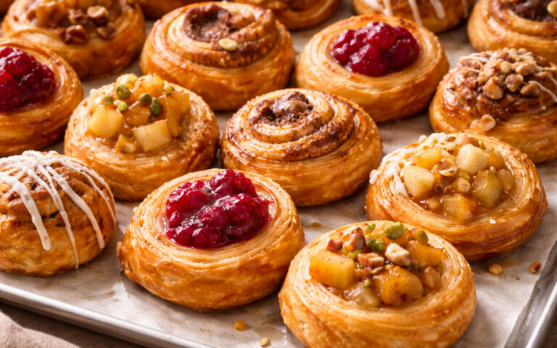
Mixed mini-format boxes create visual richness. Apple, raspberry, cinnamon, maple, custard, maybe pecan, maybe a seasonal flavor. Suddenly the customer is not buying one pastry. They are buying choice. And choice always feels slightly more luxurious than quantity alone.
That is why these assortments work so well in foodservice. They make buffet tables look fuller. They give office catering an easy upgrade. They let cafés offer something that feels polished without demanding a great deal of labor or display space. One tray of assorted minis can do the emotional work of a much larger offer.
Retail benefits from the same effect. A mixed mini box feels suitable for sharing, but also perfectly acceptable as a personal treat spread over two days, or one evening, depending on discipline and weather.
Coffee is the quiet hero of the whole category
Mini pastries are strong on their own, but coffee is what really turns them into a commercial weapon.
A full-size pastry sometimes competes with breakfast. A mini Danish complements the drink. That makes it a much easier upsell. The customer does not need to reframe the occasion. They are still buying coffee. They are just making the coffee feel more complete.
That matters in cafés, convenience, forecourts, hotels and travel catering. The item does not need to justify itself as a full meal or a serious dessert. It only needs to whisper, very politely, that the cappuccino deserves company.
And because the size feels manageable, resistance stays low. The customer who would hesitate over a large pastry may say yes to a smaller one without much internal debate. That is where good bakery formats quietly outperform flashy ones. They do not force the sale. They slip into the occasion naturally.
Permissible indulgence is a clumsy phrase, but a useful one
The wording is a bit corporate, yes. Nobody says “I fancy a permissible indulgence” out loud unless they work in marketing and have not been stopped in time. Still, the idea behind it is very real.
People want treats that feel reasonable. Not joyless. Not medicinal. Just reasonable.
Mini pastries hit that note well. They offer flake, butter, fruit, sweetness, texture, aroma, all the things people actually want from pastry, but in a size that feels less reckless. That matters when consumers are watching spend, trying not to waste food, or simply looking for a smaller reward that fits into an ordinary day.
This is also why the format tends to encourage repeat purchase. A large pastry can feel like an event. A mini pastry feels like something you can buy again next week without writing an apology letter to your better instincts.
Frozen bakery gives the idea real muscle
The reason this trend has staying power is that it is not just consumer-friendly. It is operator-friendly too.
Frozen mini pastries are easy to stage in smaller batches. That sounds minor until you run a real counter. Then it becomes very important. Smaller batch baking means fresher presentation, better aroma at point of sale, and less waste at the end of the day. Operators can top up rather than overproduce. That alone makes the format attractive.
There is also a labor argument. Minis look refined, but they are surprisingly easy to work with in a frozen program. They thaw, proof or bake quickly depending on the product. They are simple to arrange. They help create a premium bakery impression without demanding a full artisan setup in the back of house. For cafés and hospitality sites that want bakery theatre without bakery chaos, that is a very useful compromise.
And then there is portion control, which is less glamorous but no less important. Mini pieces let operators price smartly, portion consistently and build mixed offers without too much guesswork. They can be sold singly, bundled with beverages, placed in breakfast baskets, or used on platters where variety matters more than size.
Sharing is part of the appeal
One overlooked strength of the category is that mini pastries are socially easy. They are built for sharing without becoming messy.
A full-size pastry often belongs to one person. A mixed mini assortment belongs to a table. That makes it more flexible across channels. It works for family brunch, office catering, meeting rooms, hotels, airline lounges, even those slightly awkward business breakfasts where nobody wants to wrestle with a giant pastry while discussing margins.
The sharing angle also helps perceived value. When several people can dip into one box, the purchase feels more practical. It becomes less of a self-indulgent buy and more of a small hospitality gesture. That subtle shift matters in retail. It widens the range of reasons to buy.
And because the pieces are small and varied, people tend to sample more than they planned. One becomes two. Two becomes “I was only trying the maple one as well.” This is not a bug in the format. It is the format doing its job.
The best assortments still feel like real pastry
There is one trap here. Some mini products are genuinely appealing. Others just look reduced. That is not the same thing.
The strong assortments keep the identity of pastry intact. The lamination needs to show. The fillings need to look distinct. The shape has to feel intentional. A mini apple Danish should still look like a proper apple Danish, not like a compromise that got resized in a spreadsheet.
If the item looks thin, anonymous or underfilled, the whole proposition weakens. Customers may accept a smaller portion. They are much less forgiving about a smaller pleasure. That is why successful minis usually lean into finish, gloss, visible fruit, defined swirls, recognizable toppings, that tiny signal that says yes, this is still worth it.
That matters even more in retail photography and display. Small products need character. Without it, “mini” starts to read as “less.” With it, mini reads as premium, curated and a little bit clever.
Why the segment is moving now
This is not really a fad story. It is a fit story.
Mini Danish and bite-size pastry assortments fit the way people shop, snack and entertain right now. They fit tighter budgets better than oversized indulgence. They fit coffee culture perfectly. They fit the need for controlled treats, smaller moments and low-risk upgrades. They fit frozen bakery operations because they support flexible bake-off, easy refresh and better waste control.
That is why they are selling fast. Not because they are tiny. Because they are useful, and useful products tend to stick around long after trend language gets bored and wanders off to annoy another category.
For frozen bakery suppliers, this is a good place to be. For operators, even better. And for shoppers, it is one of those rare situations where convenience, restraint and pleasure all end up on the same tray.
Conclusion
Mini Danish and bite-size pastry assortments are proving that smaller formats can create bigger commercial opportunities when the product is built for real occasions. They work as coffee companions, sharing formats, breakfast upgrades and portion-friendly treats that do not feel austere. In foodservice, they help operators add value without adding much friction. In retail, they turn indulgence into an easy, repeatable purchase. Frozen bakery makes the model even stronger by supporting fast bake-off, fresher presentation and tighter control over waste. That is why the category has momentum. It is not selling fantasy. It is selling a treat that knows exactly how much is enough.
Essential Insights
Mini pastry assortments are moving fast because they combine indulgence, variety and portion control in a format that works naturally with coffee, sharing and high-turn bakery occasions.