The -15C Gamble: The Climate Win Frozen Food Wants, and the Quality Risk It May Not Admit
For nearly a century, -18C has sat in frozen food like a law of nature. Now it is being challenged, not by a fringe theory, but by a serious mix of climate pressure, energy economics, modern monitoring technology, and category-level product testing. Supporters of a shift to -15C see a rare industrial prize: lower power use, lower emissions, and lower cost without tearing up the frozen model. Critics see something else entirely. They see reduced thermal protection, shorter quality windows, and a dangerous temptation to treat all frozen foods as if they behave the same. That tension is exactly why this debate matters. The question is no longer whether -15C sounds bold. The question is whether the industry actually knows its products well enough to make that move without creating a quieter, slower, more expensive quality problem.
This is not really a temperature debate. It is a margin-for-error debate.
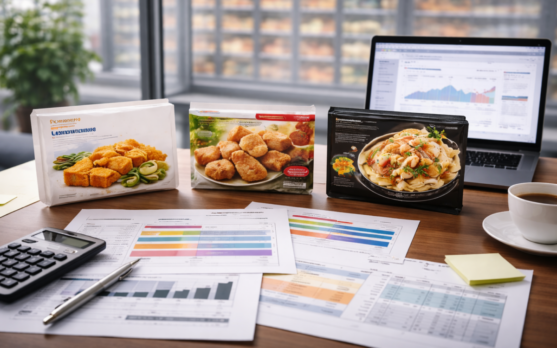
The most seductive thing about the move from -18C to -15C is how small it sounds. Three degrees. That is all. In boardroom language, it sounds almost harmless. In operational language, it sounds like low-hanging fruit. In climate language, it sounds even better, because the numbers are not trivial. The Three Degrees of Change work put serious weight behind the idea, arguing that a three-degree increase across the frozen food chain could cut energy use and reduce carbon emissions at a scale large enough to matter globally. Then Nomad Foods added commercial oxygen to the story by showing, through its work with Campden BRI, that tested products stored at -15C could deliver around 10 to 11 percent freezer energy savings.
That is where the industry got excited, and for understandable reasons. When energy costs are still volatile, ESG targets are tightening, and large manufacturers are under pressure to decarbonize without destroying margins, a change like this feels almost suspiciously attractive. Too attractive, perhaps.
Because the real problem is not whether freezers can be turned up by three degrees. Of course they can. The real problem is what disappears when that safety buffer gets thinner. Not food safety in the dramatic, headline-grabbing sense. Quality protection. Shelf-life resilience. Tolerance for fluctuation. Tolerance for sloppy handling. Tolerance for one bad handoff in a long cold chain. At -15C, the system may still work. It just works with less forgiveness.
The science is not saying "no." It is saying "not all products, not all conditions, not all operators."
This is what makes the topic so powerful editorially. It refuses to behave like a neat yes-or-no story. The current science does not support a blanket dismissal of -15C. But it does not support a blanket celebration either.
The strongest pro -15C argument is straightforward. A lot of frozen foods are microbiologically stable under frozen storage, and early industrial work suggests that some categories can tolerate -15C without obvious commercial damage, at least under tested conditions. That matters. The sector is not dealing with fantasy here. It is dealing with a legitimate operating hypothesis.
But the strongest cautionary signal is just as important. The 2025 review tied to the International Institute of Refrigeration argued that a move from -18C to -15C could mean, as a broad rule-of-thumb, around 30 percent less sensory quality life. That line should make every QA team sit up a little straighter. Because "quality life" is where brands quietly bleed value. Not overnight. Not in some dramatic collapse. Slowly. Through texture drift, surface damage, moisture migration, vitamin loss, duller appearance, poorer cook performance, and a product that still passes spec but no longer feels quite right.
That is the part many climate-first narratives glide past. Food does not have to become unsafe to become disappointing. And disappointing, at scale, is expensive.
The frozen aisle is not one category. It is a collection of very different thermal personalities.
This is where the old industry habit starts to look clumsy. For years, frozen food has been managed as if one universal storage number could cover a wildly mixed portfolio. It was administratively tidy, but scientifically blunt.
A frozen pizza is not premium ice cream. Breaded chicken is not frozen dough. Peas are not leafy vegetables. White fish portions are not rich seafood products with more delicate texture behavior. A bag of fries is not a premium laminated bakery line. Yet when people talk about moving from -18C to -15C, they often speak as though all these products are standing shoulder to shoulder under the same thermal logic. They are not.
If this transition goes anywhere, it will not go there as a universal reset. It will go there as segmentation. That is the real future hidden inside the debate. Some categories will prove robust enough to move. Some will move only under tighter fluctuation control, shorter storage windows, or better packaging discipline. Others will stay where they are because the sensory risk is simply too expensive.
Who looks strongest if the industry starts warming the frozen chain?
The first real candidates are the categories that combine scale, formulation stability, and operational predictability. This is why processed savory lines are getting so much attention. Pizza, coated proteins, some prepared meals, and certain plant-based frozen products are much better placed to survive this conversation than delicate premium products built around fine texture or narrow sensory tolerance.
These are the products that large manufacturers understand well. They are produced at scale, tested repeatedly, and often supported by relatively stable process control. In other words, they are the kind of products you would choose first if you wanted to test how far a warmer setpoint can go without inviting chaos.
Some meat categories could also emerge as stronger candidates than many people expect, especially where product structure is robust and quality expectations are less dependent on fragile textural detail. That does not mean "all frozen meat is fine at -15C." It means the category deserves more nuanced discussion than it usually gets.
Who should be nervous?
Ice cream should be nervous. Bakery should be nervous. Parts of seafood should be nervous. Certain vegetable lines should be nervous too, especially when nutrition retention and texture are central to the product promise.
Ice cream is the easiest warning sign because it is brutally honest about temperature abuse. It tells on you. Crystal growth, coarsening texture, and loss of smoothness are not abstract risks in frozen dessert. They are the whole game. A warmer storage regime does not automatically destroy the category, but it does make the category much less forgiving, especially in real retail where cabinets are opened constantly and temperature discipline is never as perfect as PowerPoint likes to imagine.
Frozen dough and premium bakery products are another danger zone. They are highly sensitive to storage conditions and especially to fluctuation. That point matters because the move to -15C is often discussed as though average temperature is the main issue. It is not. The hidden villain is fluctuation. A chain that says it is operating at -15C but actually swings through poor handling, weak last-mile practices, or inconsistent retail execution may create much bigger quality problems than a disciplined chain sitting nominally colder.
Vegetables are also a trap for lazy analysis. Some products are clearly tougher than others. A category-level statement like "frozen vegetables can move to -15C" is exactly the kind of sentence that sounds efficient and turns out to be foolish. The frozen vegetable drawer contains several very different stories at once.
The winners will not be the warmest operators. They will be the smartest ones.
This may be the most important commercial point in the whole debate. The companies best positioned to benefit from -15C are not the ones with the boldest sustainability slogans. They are the ones that can actually control the chain. End to end. With data. With discipline. With category-specific rules. With real visibility into fluctuation rather than vague compliance assumptions.
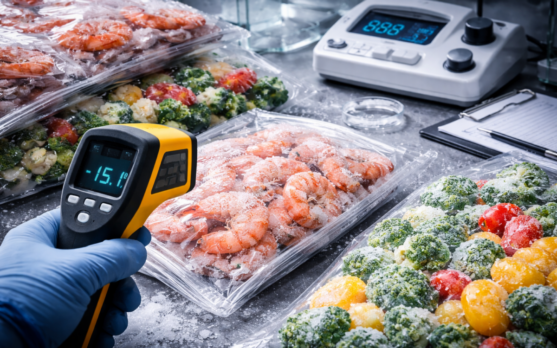
That is why the newer industry push around temperature monitoring matters so much. Once the conversation moves from "freezers are set at X" to "the product actually experienced Y profile from plant to retail," the whole debate matures. And it has to mature. Because a setpoint is just a number. A temperature history is reality.
The commercial upside of -15C is real only if that reality is under control. If one warehouse behaves differently from another, if one retailer pulls product colder again, if transport practices vary by route, or if operators save energy on paper while bleeding consistency in practice, then the supposed gain starts leaking away. Some of it leaks into recooling. Some into claims risk. Some into consumer disappointment. Some into a slower erosion of trust that nobody notices until repeat purchase starts wobbling.
What happens next
In the short term, expect more talk than transformation. There is too much momentum for the subject to fade, but still too much uncertainty for a clean regulatory reset. The March 2026 FAO and WHO call for data makes that plain. This issue is still being actively examined at the scientific and policy level, which means the industry is moving into a proving phase, not a settled phase.
Over the next two to five years, selective adoption looks far more likely than full conversion. Large manufacturers, sophisticated retailers, and tightly managed private-label systems may start to classify portfolios by thermal sensitivity rather than pretending everything deserves the same frozen rulebook. That would be a very big shift, not because the number changes, but because the philosophy changes. Frozen food would stop being managed by legacy convention and start being managed more explicitly by evidence.
Longer term, the likeliest outcome is not the death of -18C. It is the death of one-size-fits-all frozen storage. Robust categories may move upward. Mid-risk categories may move selectively with tighter controls. High-sensitivity categories may stay where they are. That outcome would be less simple, but a lot more honest.
So what really happens if frozen food stops living at -18C?
The industry gains a serious decarbonization lever. It gains a cost opportunity. It also loses the comfort of pretending one old standard answers every product question. Some businesses will unlock genuine advantage. Others will discover that three degrees can quietly strip away the margin that was protecting their quality promise all along.
That is the gamble. Not whether the freezer can be warmer, but whether the operator is good enough to deserve it.
Conclusion
The move to -15C is not a simple efficiency story. It is a sorting mechanism. It will separate frozen categories that are genuinely robust from those that only looked robust under a generous thermal safety margin. It will also separate disciplined operators from careless ones. The companies that win will not be the ones that rush to call -18C outdated. They will be the ones that can prove, category by category and route by route, where -15C protects value and where it starts to eat it.
Essential Insights
-15C is not the future of all frozen food. It is the future of frozen food that has been properly classified, properly tested, and properly controlled.