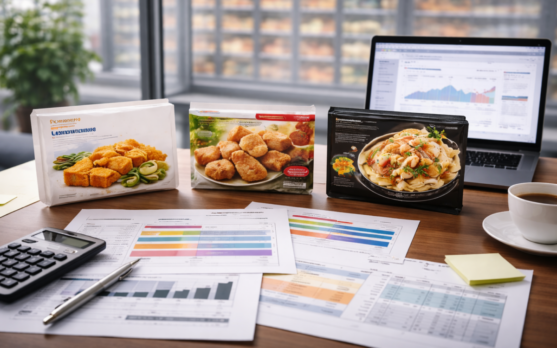
Packaging That Talks: The New Language of Frozen Potato Packs
Packaging used to be the quiet finale of the factory. The fries are done, the product is stable, now you just wrap it and ship it. That order of importance has flipped. In frozen potato processing, packaging is becoming a decision-making surface: it signals operational maturity, it carries proof when something goes wrong, and it can either protect margin or quietly leak it. The bag is no longer a bag. It is part of the system.

Start at the end of the line
If you want to understand why packaging is suddenly getting strategic, do something simple: stand at the packaging line for twenty minutes. Watch what people actually worry about. It is not only artwork. It is seal integrity at speed. Print quality that stays readable after condensation. Film that behaves consistently when the temperature swings between packing hall and deep freeze. Coding that scans on day one and also scans after weeks of abrasion in distribution.
Most processors learned this the hard way. You can have a perfect fry and still lose the account because packs arrive with weak seals, unreadable codes, or confusing claim language. Retail and foodservice do not separate product from packaging the way plants sometimes do. They experience them as one thing.
Packaging is where trust becomes visible
Frozen potato buyers have become more skeptical, not more emotional. They do not want a story. They want control. When something goes wrong, they want you to isolate a batch quickly, explain what happened, and show that the problem is contained. A clean, disciplined packaging and coding system makes that possible.
That is why traceability is moving from compliance checkbox to commercial advantage. If your lot coding is consistent, scannable, and mapped to a clean internal batch logic, your customer’s QA team breathes easier. You become the supplier that can answer questions without a week of email chains and spreadsheet archaeology.
From barcodes to richer identifiers
The classic barcode answers a basic question: what is it? The next phase of identification is about context: which lot, which run window, which plant, which line, which packaging material, which date and time. Not because people are curious. Because supply chains got tense.
In frozen foods, the practical value is obvious. A buyer reports an issue. Your team pulls the lot code, traces it to a run, checks inbound raw material, checks fryer parameters, checks oil management, checks seasoning dosing, checks packaging film roll ID. That last part matters more than most plants like to admit. Film and ink issues can mimic food issues in the eyes of customers. A weak seal reads as a safety risk. A smeared code reads as a traceability failure. Neither is a good look.
Claim discipline is now part of packaging strategy
Packaging carries language that can either reassure or backfire. Clean label, natural, no additives, responsibly sourced, recyclable, lower footprint. The market is full of words that sound good and create headaches later. The modern packaging team acts more like a risk team than a design team. They ask: can we defend the claim, consistently, across seasons and across suppliers? Will this wording survive a retailer audit? Will it survive a competitor complaint? Will it survive a social media screenshot?
Frozen potato products sit in a tough middle ground. Customers want simple ingredient lines. They also want consistent texture, predictable color, and stable performance across storage windows. Plants compensate with process control, and sometimes with ingredients that marketing would rather not talk about. The worst outcome is a pack that promises simplicity while the operation is built on complexity. That gap is where reputational risk lives.
Sustainability is not a slogan, it is an engineering tradeoff
Packaging sustainability is where good intentions meet cold reality. Frozen packs need barrier performance. They need reliable seals at low temperatures. They need resistance to grease migration. They need print that does not degrade. They need to survive handling, stacking pressure, and moisture without turning into a leaky, ugly mess.
The push toward simplified material structures is real. Many processors are testing and adopting cleaner film structures, often framed as easier-to-recycle solutions. But the tradeoffs are not theoretical. If barrier performance drops, shelf life stability can suffer. If seal performance becomes less forgiving, you increase rework and waste. If waste goes up, your sustainability narrative starts to wobble.
The pragmatic approach is boring and effective: treat packaging material changes like process changes. Run trials. Stress test packs in real cold chain conditions. Measure seal failures, scannability loss, and damage rates. Do not rely on lab samples alone. Distribution has a way of revealing the truth.
Packaging that talks also means packaging that helps your customer
Smart packaging does not have to mean chips and sensors. In B2B frozen, the most useful packaging is the kind that reduces friction for the customer. Clear case labels that match purchase orders. Lot codes placed where warehouse staff can scan them quickly. Consistent formats across SKUs so staff do not guess. Documentation that aligns with what the pack says, not a separate universe.
There is also a subtle point here: when your pack makes your customer’s receiving process smoother, you become easier to do business with. That matters in private label and foodservice, where switching suppliers is not romantic, it is operational. Procurement teams remember who creates extra work.
Private label pressure makes packaging a control system
As private label grows, packaging becomes the boundary between brands, plants, and accountability. A single site may run multiple labels, multiple specifications, multiple markets. Mix-ups are costly and embarrassing. Strong packaging governance helps prevent the easy mistakes: wrong language version, wrong allergen statement, wrong carton label, wrong code format.
That is where packaging line controls start to look like quality controls. Vision checks for label placement. Verification of printed codes. Inline rejection of bad seals. Tight reconciliation of film roll usage. These are not glamorous investments, but they protect relationships. In a category where pricing is aggressively negotiated, trust is one of the few levers that still creates room.
What comes next
Over the next few years, expect packaging to behave more like a passport. More structured identifiers. More pressure to align on common data formats. More demand for proof that can travel with the product. Not because the industry loves complexity. Because the world got less forgiving.
For frozen potato processors, the strategic move is simple to describe and hard to execute: stop treating packaging as the end of the line. Treat it as an interface between your factory and your customer’s risk model. When you do that, packaging stops being a cost center and becomes a credibility tool.
Part of the series: ROOT REVOLUTION Series Overview
Explore the full editorial series.
- 01: Tuber Tomorrow - Market growth, shifting geographies, and the race for efficiency.
- 02: Steam & Sustain - How steam recycling is reshaping plant efficiency.
- 03: Freeze Precision - Rethinking Cold in Potato Processing.
- 04: Genome Crunch - Breeding the potato for taste, resilience, and transport.
- 05: Packaging That Talks - Smart labels, greener wraps, and consumer trust.
- 06: Global Plate, Local Factory - Why India is the next processing battleground.
- Bonus episode: Social Spud Culture - How potatoes became content
Conclusion
Packaging is no longer the quiet final step. It is where traceability becomes real, where claims become defensible or dangerous, and where operational maturity becomes visible. Frozen potato processors who build disciplined packaging systems will move faster in disputes, look stronger in audits, and feel less exposed when the market tightens. In this part of the industry, the bag speaks. The goal is to make sure it says something useful.
Essential Insights
Packaging in frozen potato processing is turning into supply chain infrastructure. Strong coding, disciplined claims, and material choices tested in real cold conditions reduce risk and improve buyer confidence.
The best operators treat packaging changes like process changes: trial, measure, stress test, then scale.
As private label and scrutiny rise, packaging quality becomes a visible marker of operational control.