Recycle-Ready Cheese Flow-Wrap Is the Stress Test Category for Sustainable Flexible Packaging
Cheese is one of those products that looks calm and harmless until you try to package it at scale. It sweats oil, it carries powerful aromas, it hates oxygen, it punishes weak seals, and it travels through cold chains where condensation is normal, not a freak event. If you want a category that exposes every weakness in “sustainable” flexible packaging, cheese flow-wrap is it.
That is why cheese is quietly becoming the proof point. Not because it is trendy, but because it is unforgiving. If a recycle-ready film can protect cheese without leakage, odor escape, or shelf-life compromise, it can usually handle easier categories too. In packaging, cheese is a stress test you cannot fake.
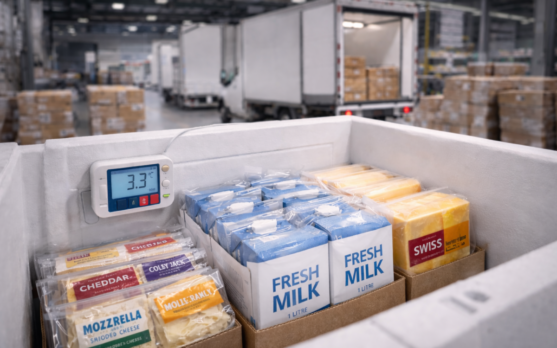
Why cheese flow-wrap is the category that breaks weak sustainability claims
Most packaging sustainability conversations start with a simple sentence: “Let’s make it recyclable.” Cheese responds with a longer one: “Fine, but don’t change anything else.” That “anything else” is where the work is.
Cheese packaging is not just a barrier problem. It is a system problem. Film structure, sealant chemistry, friction, stiffness, print, machine settings, and even how the product surface behaves at different temperatures all show up in performance. And because cheese is both valuable and sensitive, the tolerance for failure is low. A tiny leak is not “a small defect.” It is a shelf-life event, a consumer trust event, and a retailer complaint waiting to happen.
What makes cheese flow-wrap uniquely brutal
1) Seal integrity under contamination is the real battlefield
Flow-wrap is fast and efficient, but it is also seal-dependent. Cheese often introduces “contamination” at the seal area: oils, moisture, fine particles from cutting, and condensation from temperature transitions. Those contaminants reduce seal strength and can create micro-channels that are invisible on the line but disastrous in distribution.
So when packaging teams talk about recycle-ready cheese flow-wrap, the first question is not “Is it recyclable?” The first question is “Does it seal like the incumbent structure, even when the product is not behaving perfectly?” That means strong hot tack, stable seal windows, and consistent end-seal performance at speed.
2) Odor control is not marketing, it is chemistry
Cheese aroma is not a soft detail. It is volatile compounds that will migrate if you let them. If the pack allows aroma to escape, you get two problems at once: the product loses character, and the surrounding environment picks it up. Retailers hate that. Consumers notice it. And in mixed-product fridges and distribution environments, odor pick-up becomes real.
A recycle-ready structure has to manage aroma without leaning on materials that recycling systems struggle with. That is where careful barrier design matters, and where “mono-material” has to be interpreted intelligently, not dogmatically.
3) Shelf-life expectations force you to be honest about oxygen
Oxygen is the silent attacker. Even when a cheese format looks stable, oxygen ingress can accelerate flavor changes, color shifts, and mold risks depending on the product type and conditions. Traditional multi-material laminates have been very good at oxygen control. The sustainability challenge is to approach that performance while staying compatible with a practical recycling stream.
In other words: cheese does not let you win sustainability by downgrading barrier and hoping nobody notices. People notice.
What “recycle-ready” really means in flexible cheese packaging
In real operations, recycle-ready usually means the package is designed to be compatible with an established recycling pathway for flexible plastics in the target market. That sounds simple. It is not.
Two uncomfortable truths sit underneath the phrase:
Recycling systems are not uniform. A structure that is “ready” in one region can be “problematic” in another.
“Mono-material” does not automatically mean “recyclable at scale.” A film can be technically one polymer family and still behave poorly in recycling if additives, inks, coatings, or tie layers are not designed for recovery.
For cheese flow-wrap, recycle-ready tends to converge toward two main routes: PE-based structures designed for polyethylene streams, or PP-based structures designed for polypropylene streams. Both routes can work. The deciding factor is not ideology. It is local collection reality plus performance requirements.
The engineering tradeoffs everyone tries to avoid, and why cheese forces you to face them
Barrier vs recyclability
High barrier has historically been achieved with combinations that recycling systems dislike: mixed polymers that do not separate cleanly, metallization, or legacy barrier materials that complicate processing. The new generation of recycle-ready films is trying to deliver barrier through smarter architecture: orientation for stiffness and improved barrier, thin barrier layers used carefully, and coatings engineered to remain compatible with the target recycling stream.
Cheese is where this balancing act becomes visible, because if barrier is insufficient, shelf-life suffers quickly. If barrier is good but the structure is not compatible with recycling, the sustainability claim collapses. Cheese does not allow comfortable half-wins.
Stiffness and machinability vs downgauging
Everybody wants downgauging because less material usually means less footprint and lower cost. But thin films can become “nervous” on high-speed flow-wrap lines: unstable web handling, higher scrap, more wrinkles, and weaker puncture resistance. Cheese packaging is physically demanding because product edges, corners, and handling can create abrasion and pinholes.
A recycle-ready film has to run like a professional, not like a fragile prototype. That means consistent coefficient of friction, stable tracking, good print registration behavior, and a sealing window that does not require operators to baby the line.
Leak prevention vs consumer convenience
Many cheese formats want easy-open features and clean opening behavior. But adding tear systems and convenience features can stress the structure, especially if they introduce weak points or require layers and adhesives that are not recycling-friendly. Cheese forces a pragmatic compromise: convenience matters, but not at the expense of hermeticity and shelf-life.
Why this category is becoming a “proof point” for the whole sustainable flexible packaging conversation
Because cheese is a proxy for reality. If your film concept only works when everything is perfect, it is not a commercial solution. Cheese is never perfect at scale. It comes with variability in surface oils, moisture, temperature history, cut quality, and handling. The packaging has to absorb that variability and still deliver consistent performance.
This is why, internally, many companies treat recycle-ready cheese flow-wrap as a credibility test. Pass here, and you can credibly expand to other demanding categories: processed meats, high-fat snacks, chilled prepared foods, and plenty of frozen items that also experience condensation cycles and seal contamination risks.
It is also why retailers and large brand owners pay attention. A recycle-ready cheese wrapper that performs at speed signals that sustainable flexible packaging is moving out of pilot mode and into operational reality.
What decision makers should ask for before calling it a win
“Recycle-ready” should not be approved on a slide deck. It should be approved on data and line behavior.
Seal performance at speed: seal strength consistency, hot tack, contamination tolerance, end-seal integrity, fin-seal robustness.
Leak detection results: vacuum decay testing, dye penetration, real-world distribution trials with temperature cycling.
Barrier metrics tied to product outcomes: oxygen control linked to sensory stability and mold risk over target shelf-life.
Odor containment and odor pick-up evaluation: both directions matter.
Scrap and uptime impact: if the film increases downtime or scrap, sustainability gains can evaporate operationally.
Recycling compatibility evidence: clear proof the structure aligns with a real recycling pathway in the target market.
The best teams also look beyond the film: pack format, gas flushing strategy (when used), headspace control, and how the product is presented can reduce the burden on the material itself. Sustainable packaging is rarely a single-material miracle. It is a system redesign with discipline.
Conclusion
Cheese flow-wrap is becoming the stress test category because it demands performance with no excuses. Leakage, odor, and shelf-life are not “nice-to-haves.” They are the core job of the package. If recycle-ready flexible films can deliver that job reliably on high-speed lines, under cold-chain reality, then sustainable flexible packaging stops being a promise and becomes an operating standard.
That is why the industry is watching cheese. Not for symbolism, but for proof.
Essential Insights
Recycle-ready cheese flow-wrap is the category that exposes whether sustainable flexible packaging can match traditional performance. If it seals under contamination, contains odor, maintains barrier, and runs at speed without operational penalties, it becomes the benchmark other categories can follow.