Low-Glycemic Coatings in Frozen Breaded Chicken and Seafood: The Crunch Is Staying, the Refined Starch Isn’t
The frozen aisle has a funny way of making nutrition trends brutally practical. You can say “lower glycemic” or “fewer refined carbs” all day long, but the moment you wrap that promise around a shrimp or a chicken strip, you inherit a very real job description: keep the coating crisp after freezing, shipping, and whatever a consumer’s air fryer does on a Tuesday night. That’s the quiet story right now in breaded frozen seafood and chicken. Formulators aren’t just swapping wheat flour for “something else” and calling it innovation. They’re rebuilding breading systems with pulse flours, resistant-starch strategies, and hybrid vegetable-forward blends, aiming to reduce refined starch load without sacrificing the reasons these products sell: crunch, adhesion, and reliable cook performance.
First, a reality check: “gluten-free” is not the same thing as “low glycemic”
A lot of shoppers use gluten-free as shorthand for “healthier,” and plenty of frozen breaded items have followed that signal with rice flour coatings or alternative crumbs. But glycemic impact isn’t decided by whether wheat is present. It’s driven by how digestible the overall starch system is, how much fiber and protein comes along for the ride, and how the product is processed. In other words: you can remove wheat and still end up with a fast-digesting, refined-starch-heavy crust.
The newer wave is different. Instead of “wheat-free” as the headline, you’re seeing breadings designed around slower-digesting carbohydrate profiles and better macro balance, while still behaving like a proper coating under frozen conditions.
Why breading is a system, not an ingredient
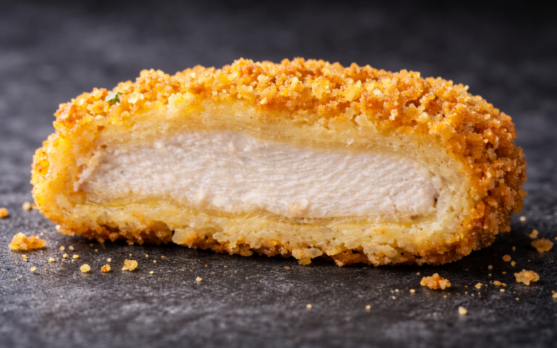
When people picture breaded frozen chicken or fish, they picture “crumb.” In plants, it’s usually a three-layer story: a pre-dust (the primer), a batter (the glue and film), and a crumb layer (the crunch and visual texture). Pull out refined wheat flour or conventional starches and you don’t just change nutrition. You change viscosity, pickup, adhesion, browning, moisture migration, and how the crust survives freeze-thaw and reheating.
This is why the most credible “lower refined starch” moves are coming as whole breading systems: blends engineered to keep the coating on the protein, keep it crunchy, and keep it stable in consumer cooking modes that are less forgiving than fryer oil.
Pulse flours moved from “trend ingredient” to coating workhorse
Pea, chickpea, and lentil flours are showing up in breaded systems for a simple reason: they do two jobs at once. Nutritionally, they bring more protein and fiber than refined wheat flour. Functionally, they can build structure, help browning, and support crispness when used intelligently.
Industry groups and ingredient suppliers have been unusually direct about the functional side: pulse ingredients can improve crispiness and crunch, strengthen coating stability, and support golden-brown color development without leaning as hard on additives like caramel color. That’s not marketing fluff; it’s the kind of detail formulators care about because it touches both appearance and label strategy.
What’s changed lately is where pulses show up. Not only in niche “alternative” SKUs, but in products that still look and behave like the mainstream thing. Same strip, same fillet, same weeknight convenience. The difference sits in the coating backbone, and most shoppers only notice it when they read the ingredient list.
How it shows up on shelf: two approaches that feel very different
1) “Lighter breaded” coatings that put the flour front and center
Some frozen chicken and seafood lines are clearly leaning into chickpea, pea, or lentil flour as the main flour system. The message is straightforward: less reliance on classic refined flour bases, more protein and fiber in the crust, and a cleaner-sounding ingredient list.
When these coatings land well, the crunch is sharp and clean, almost snappy, with a slightly roasted, nutty note that can work beautifully on chicken strips and white fish. When they miss, the crust can read dry, a bit sandy, or brittle in a way that sheds in the bag. The difference usually isn’t “the ingredient”. It’s the details: flour granulation, how it hydrates in the batter, and the binder setup that keeps the coating locked on during freezing and air-fryer cooking.
2) Hybrid coatings that keep the classic bite, but change the carb story
Most brands don’t want the coating to announce itself. They want the product to eat like a familiar nugget or fillet, just with fewer refined starch cues and a label that feels more modern. That’s where hybrids come in: pulses blended with vegetable powders or other components that support crispness and browning, while keeping the overall sensory profile “normal”.
This approach is less dramatic, but often more scalable. It lets formulators dial in crunch and color without forcing a big flavor shift, and it gives marketing a simpler on-pack narrative. The coating still behaves like a coating, it just leans less on the usual refined flour playbook.
Resistant starch and “film logic”: the work that happens under the crumb
Pulse flour is the ingredient people recognize, but the real engineering often sits one layer deeper, in the batter film that sits between protein and crumb. That thin film decides a lot: how well the coating adheres, how moisture moves during cooking, and whether the crust stays crisp or turns soft and steamy.
This is where resistant starch and high-amylose approaches become useful. They can help create a tighter, more coherent film, the kind that crisps cleanly and holds up better through frozen storage and reheating. In plain terms, they help the coating keep its shape and bite when the product goes from frozen, to hot air, to that first crunch, without needing to lean so heavily on refined starch-heavy systems.
Research in fried batter systems has repeatedly pointed at the same mechanisms: starch-protein interactions and resistant starch inclusion can influence oil uptake and textural outcomes, and certain starch systems can improve batter rheology (how it flows and holds), stability during frying, and even freezing behavior by delaying staling/structure changes that can happen during frozen storage. For frozen breaded items, that “freezing stability” angle matters more than people admit. A crust that behaves beautifully fresh can go dull, leathery, or fragile after weeks in frozen distribution.
High-amylose systems have long been discussed in coatings because of their film-forming behavior and the way they can support crispness and reduce greasy bite. In today’s context, that film logic is getting paired with pulses and other alternatives: build a smarter batter film, then put the crunch layer on top of something stable.
The low-glycemic promise has to survive the air fryer
In frozen breaded chicken and seafood, “cook performance” is the moment of truth. Most consumers aren’t deep-frying. They’re baking, air-frying, sometimes microwaving and hoping for mercy. That changes how coatings must behave.
Air fryers are especially unforgiving because you’re dealing with high heat, intense airflow, and localized steam. A coating that can crisp without oil, and stay crisp instead of turning tough or powdery, is the difference between repeat purchase and one-star regret.
This is where the newer breading systems are clearly designed for modern kitchens: tighter adhesion to prevent flaking, better moisture control so the crust doesn’t steam itself soft, and crisp retention so the bite still has that “crack” after cooking.
One more nuance: “lower glycemic” needs discipline, not vibes
Pulse flours and resistant starch strategies can support a lower glycemic response in many food contexts, but glycemic impact is not a vibe you can sprinkle into a formula. Milling, processing, and the total digestible starch load matter. Claims need substantiation, and the cleanest formulation logic is often simple: replace some digestible refined starch with ingredients that bring fiber, protein, and resistant starch characteristics, then verify the result.
The brands that handle this well tend to talk about what they actually did (less refined flour, more protein/fiber, grain-free where relevant) rather than making bold glycemic promises they can’t support at scale.
What to watch next in frozen breaded seafood and chicken
Three signals feel real, not speculative:
First, pulse flours are becoming “normal” in coatings, not just in niche SKUs. They’re showing up as functional tools for crunch and color, not only as nutrition props.
Second, the smartest systems will keep leaning on engineered batter films, starch and protein interactions, resistant-starch approaches, and other structural tricks, to protect crispness through freezing and air-frying.
Third, hybrid coatings (pulses plus vegetables, pulses plus protein) will likely grow because they’re easier to explain on pack while still doing real technical work in the crust.
The best products won’t taste like a compromise. They’ll taste like the category, just built on a different, less refined foundation.
Conclusion
Frozen breaded seafood and chicken are entering a more technical era of “better-for-you” where coatings do double duty: improve the carb story and still deliver crunch that holds up in the real world. The move is happening through systems, pulse flours, resistant-starch film strategies, and hybrid blends, because frozen distribution and air fryer cooking punish simplistic swaps.
If you want the short version: the innovation isn’t on the outside of the crust. It’s inside the architecture of it.
Essential Insights
Low-glycemic oriented breading in frozen chicken and seafood is shifting from simple wheat-free swaps to engineered coating systems: pulse flours for structure and nutrition, film-forming batter strategies for crisp retention, and hybrid blends that keep cook performance consistent in ovens and air fryers.