Air-Fryer-First Thai Street-Food Appetizers Hit Mainstream Retail: How Imported Shareable Snacks Keep Winning Freezer Space
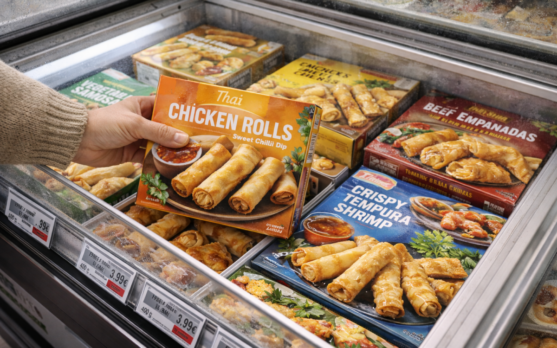
The freezer door is starting to look less like storage and more like a menu. Not a “weeknight dinner” menu, either. A small-plates, snacky, shareable menu built for air fryers and fast cravings. Thai-inspired street-food appetizers are riding that shift hard: spring rolls that actually crisp, curry puff-style bites that do not leak, satay skewers that go from frozen to browned without turning the kitchen into a smoke event, and sauce cups that feel like a proper dipping ritual instead of an afterthought. Retailers are giving these imports real space because they do something rare in frozen: they create an occasion. They turn “global bar food” into a repeatable at-home habit.
Why “air-fryer-first” changes the economics of frozen snacks
Air fryers did not just add a new cooking method. They changed what shoppers believe frozen can deliver. Crispness is no longer a restaurant-only trait. It is an expectation. That expectation is making a specific type of imported appetizer more valuable: items engineered to get crunchy fast, with minimal oil, minimal mess, and minimal babysitting.
When a product nails that promise, velocity follows. It is the kind of freezer item that becomes a default for game nights, quick guests, and “I want something salty in ten minutes” moments. Retailers care because those moments are frequent, and they pull other purchases with them.
Industry trend work has been tracking this shift through the broader “bites and minis” boom and through the steady rise of globally inspired street-food formats in frozen. The key point for this category is not that global is trendy. It is that global now comes in portions and formats that fit the appliance people actually use.
Thai street-food appetizers fit the air fryer better than most cuisines
Thai-inspired appetizers have a natural advantage in the air-fryer era: they were always built around contrast. Crunch plus heat. Sweet plus acid. Light wrapper plus bold dip. In frozen form, that translates well when the product is engineered correctly.
The winners tend to share a few structural traits:
Thin, fast-crisping shells (spring roll wrappers, wonton-like skins, flaky pastry layers).
Fillings that hold moisture without turning soggy (vegetable mixes, minced chicken, shrimp blends, or potato-forward curry fillings).
Strong dipping culture (sweet chili, peanut satay, soy-ginger, lime-forward sauces) that makes the snack feel complete.
That last point matters more than it sounds. Dips are not accessories. They are how you turn “a frozen item” into “a bar food moment.”
What retailers are really buying when they list these products
Retailers are not just buying a spring roll. They are buying a repeat occasion with a clear consumer script: open bag, air fry, dip, share. The best imported lines make that script easy.
Look at how many products now print air fryer directions as a primary path, not an optional alternative. One widely distributed imported spring roll line, for example, gives air fryer instructions at 375F for a short cook time with a mid-cook flip, and it even tells shoppers how to thaw the sauce packet quickly under cool water. That tiny detail is not trivial. It reduces friction. It reduces improvisation. It makes the experience consistent, which is exactly what keeps a product in the basket next week.
From a category manager’s perspective, these items do three useful things:
They trade up the freezer snack set with global flavor and a premium cue.
They fit multi-serve “sharing” behavior, which supports higher ring per trip.
They refresh the appetizer set beyond the same old mozzarella-stick gravity well.
The “low mess” promise is doing real work
Air-fryer-first only works if the product behaves. Consumers may tolerate a mediocre flavor once. They will not tolerate a basket full of leaked filling, blown wrappers, or sugar-heavy sauce that burns onto the tray.
This is why you see more attention to practical design choices:
Par-frying and controlled oil systems that set the crust so it crisps instead of cracking.
Starch blends and wrapper thickness tuned for hot air circulation, not deep-fry immersion.
Portion sizes that finish quickly without drying out the center.
Sauce packaging that is easy to handle from frozen without turning into a sticky ordeal.
In other words, the “innovation” is often invisible. It lives in how the wrapper vents, how the filling holds water, how the bite browns evenly, and how the product survives the reality of different home appliances.
Why imported products are punching above their weight
Imports have two built-in advantages in this niche. First, they can borrow authenticity cues without overexplaining. The names, the sauce profiles, and the street-food references do a lot of marketing work on the front of pack. Second, many Southeast Asian supply chains have long experience producing spring rolls and similar appetizers at scale, with consistent wrappers and filling control.
For mainstream retail, “imported” is not just origin. It is a signal. It suggests a restaurant-like bite, but with freezer convenience. That signal is particularly strong for Thai flavors because shoppers already associate them with takeout occasions: sweet chili, peanut satay, basil heat, lemongrass notes, lime lift. The freezer is simply capturing that same desire in a cheaper, faster form.
How “global bar food” becomes an at-home routine
Retailers are leaning into a behavioral shift: meals are getting fragmented, and snacking has become social. A bag of Thai-inspired appetizers is not always a pre-dinner starter. Sometimes it is the dinner. Sometimes it is the “we are watching something” food. Sometimes it is the post-work decompression plate.
Air fryers accelerate that behavior because they remove the usual barriers. No oil. No pan management. No long preheat. You can put a shareable plate on the table quickly, and it feels like you did something, even if you did not really “cook.”
That is why these products keep winning freezer space. They are not competing only with other frozen appetizers. They are competing with delivery fatigue and with the rising price of casual dining. When they deliver a satisfying crunch and a credible dip, they win the trade.
What brands should copy if they want to play in this space
For manufacturers and importers, the playbook is getting clearer. Air-fryer-first products that scale in retail tend to do a few things consistently:
They test for air fryer performance as the primary method, not a footnote, and they write instructions that match real consumer behavior.
They treat sauce as part of the product architecture, including thaw convenience and portion logic.
They design for crispness that holds long enough to serve, not just crispness at the moment you open the basket.
They package for sharing, because the occasion is social, not solitary.
Do that well and the product stops being a novelty. It becomes a freezer staple with global personality.
Conclusion
Thai-inspired street-food appetizers are hitting mainstream retail at the right moment: air fryers have made crispness and speed non-negotiable, and consumers are building more at-home occasions around shareable snacks. The imports that win are not just flavorful. They are engineered for low mess, fast cook times, and a dependable crunch, with sauces and formats that feel like a complete experience. For retailers, that translates into velocity and repeat. For brands, it is a clear signal: the freezer is no longer just about convenience. It is about delivering a restaurant-style moment, on demand, without the cleanup.
Essential Insights
Air-fryer-first design is turning Thai-inspired frozen appetizers into a mainstream retail weapon: quick crisping, low mess, shareable portions, and strong dipping rituals are converting “global bar food” into an at-home habit and winning durable freezer space.