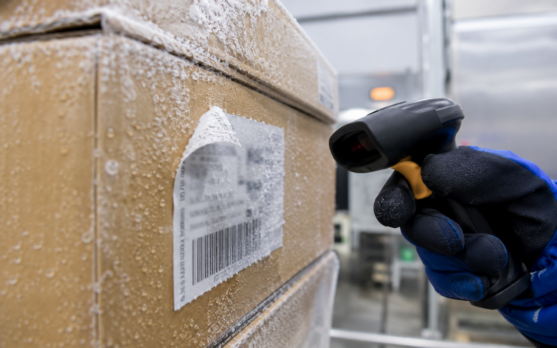
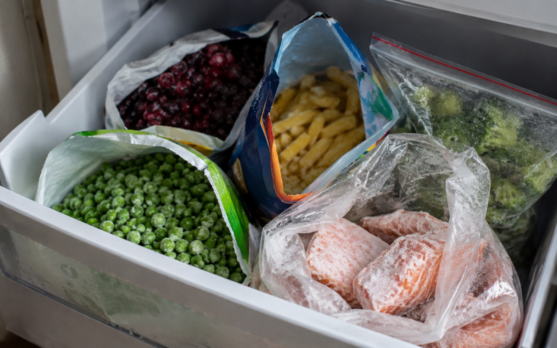
At minus 18 degrees Celsius, nobody cares what the packaging presentation promised. The fold either stays clean or it darkens. The carton remains rigid or begins to feel damp and tired. The seal holds or a fine layer of frost starts building around the food. Europe is approaching the 12 August 2026 PFAS restrictions for food-contact packaging, and the chemical transition is necessary. Yet a compliant material can still make a poor frozen pack. The risk now sits in the rushed conversions, unchanged die-lines, shortened factory trials and barrier claims accepted before the package has met oil, ice, condensation, machinery and time.

The freezer does not read the certificate
The complaint will probably arrive under an ordinary subject line. Soft cartons. Grease marks. Excess frost. Packs opening at the corner. Nothing in the email will mention PFAS.
A retail buyer may attach photographs from three stores. The product is still frozen, the date is still valid and the pack remains technically intact. Yet the box looks older than the one beside it. A dark shadow has appeared along the lower score line. One side panel has bowed. The frozen pastry inside may be perfectly edible, but the shopper cannot inspect the barrier coating or read the declaration of compliance. The shopper sees a tired package and reaches for another.
That is the commercial danger in the PFAS transition. Chemical compliance is visible to auditors and regulatory teams. Packaging weakness becomes visible to everybody else.
There is no public evidence yet of a widespread freezer-failure wave caused specifically by PFAS-free barriers. The headline remains a warning, not a claim that the damage has already happened. The concern comes from the mechanics of the transition. PFAS grease-proofing chemistries gave paper and board a highly effective defence against oil and moisture. Alternatives are available and many perform well. Their behaviour depends more heavily on coating continuity, surface protection, fold design, exposed edges and the conditions under which the finished package is made and used.
A material can be PFAS-free, recyclable, food-contact compliant and entirely unsuitable for a butter-rich pastry carton expected to survive nine months in frozen distribution. Those qualities answer different questions.
August is a deadline, not a field trial
From 12 August 2026, food-contact packaging placed on the European Union market must comply with the PFAS limits introduced by the Packaging and Packaging Waste Regulation. The United States has already moved away from PFAS grease-proofing agents in paper and paperboard food packaging, with the FDA confirming the market phase-out and ending the effectiveness of the associated food-contact notifications.
The regulatory direction is no longer uncertain. Procurement teams have deadlines. Packaging suppliers are issuing declarations. Customers are asking for evidence covering coatings, inks, adhesives and other pack components. Some frozen food manufacturers will have completed careful redevelopment programmes. Others will still be working through their packaging portfolios, starting with the packs that appear easiest to change.
That word, easy, deserves suspicion.
On a spreadsheet, switching from one grease-resistant board to another may look like a material substitution. On the factory floor, the new board meets an old cutting tool, a die-line developed around a different coating, a gluing system already pushed near its tolerance and a packing line whose operators have learned to make yesterday's material behave through experience rather than written settings.
The trial run may produce clean packs for two hours. They leave the line square, dry and attractive. The harder evidence arrives later, after the coating has spent months under pressure from food contact, frozen storage and changes in humidity. August settles whether a package may enter the market. It does not settle whether the pack will still look respectable in February.
A frozen pack lives three different lives
Frozen packaging is often discussed as though its job begins at minus 18 degrees Celsius. By then, some of the most important damage may already have started.
The first life is warm, wet and industrial. A pizza base may carry oil from cheese and sauce before freezing. A pastry enters the pack with butter or margarine distributed through delicate laminated layers. Breaded appetizers leave crumbs and fat near the sealing area. Ready meals bring sauces, powders and small food particles close to the tray flange. The pack is filled, folded or sealed while the product and factory environment are still doing things that do not appear in a freezer specification.
Then comes the cold life. Materials stiffen. Some films become less tolerant of flexing and impact. Cases are stacked, clamped, moved and occasionally dropped. Sharp frozen pieces press against the inside of flexible packs. Product moisture seeks a route through the barrier or a microscopic leak. The process is slow enough to escape a short approval trial. Several months later, it appears as surface dehydration, frost, loss of texture or a bag with far too much free air around the product.
The third life begins when the package leaves stable frozen conditions. Pallets wait near a loading bay. Cases enter retail back rooms. Freezer doors open throughout the day. A shopper carries the product through a warm car park. Condensation appears on board surfaces and exposed edges. At home, the pack may be opened, partly used, badly resealed and returned to the freezer. A meal tray may move directly from the freezer into a microwave or oven.
Grease behaviour also changes across those stages. A fat that is solid during frozen storage can migrate before freezing, during temperature excursions or when the product is heated. A barrier selected only for its behaviour in the cold has missed much of the job.
Good PFAS-free systems can handle these conditions. Dense greaseproof papers, aqueous dispersion coatings, coated paperboards, engineered moulded fibre, polymer barriers and hybrid structures are already in use. The application decides what is credible. A dry vegetable carton and a tray holding a rich sauce should never have been treated as the same barrier challenge.
The damage often begins at the fold
The most reassuring barrier result is usually measured on the least realistic version of the package: a flat, untouched sample.
The commercial pack is printed, scored, cut, folded, pressed, glued and sometimes heat-sealed. Corners concentrate stress. Coatings stretch over score lines. Tiny cracks and pinholes appear where a laboratory sheet had been continuous. Raw edges expose absorbent fibres. Oil does not need to flood the board to create a visible defect. A small route into the structure can produce darkening that spreads beyond the original point of contact.
Research on coated paperboard has repeatedly identified converting as a weak point. Creasing, folding and forming stresses can reduce oil, oxygen and water-vapour barrier performance even when the original board showed strong results. The package geometry matters as much as the chemistry.
This is where hurried conversions tend to reveal themselves. The new material is expected to run through the same die, with the same score depth and the same fold radius. A carton originally designed around a plastic laminate may ask too much of a thinner surface coating. A pressed paperboard tray may need different corner geometry. A grease barrier that performs well across the face of the board may still need protected edges, a second coating, a liner or a revised fold.
Those changes cost money. Tooling may need adjustment. Converting speeds may fall during commissioning. Coating weight and board caliper can alter forming behaviour. Adhesives may cure differently against a new surface. Print and varnish systems have to remain compatible. Packaging development becomes inconvenient just when the organisation wants the compliance project closed.
The alternative is to discover the weak point after full production has started.
A stain on a carton is sometimes dismissed as cosmetic. In the freezer aisle, cosmetic damage has operational consequences. Store staff may remove packs they believe are leaking. Consumers may assume the product has thawed. Retailers record complaints. Factory teams investigate batches that contain no food defect at all. A barrier failure can spend money across the business without ever becoming a food-safety event.
The seal may fail weeks after the line approves it
PFAS grease-proofing has been most closely associated with paper and paperboard. The transition is happening alongside a broader redesign of food packaging, including fibre-based trays, coated papers, reduced-plastic laminates and recyclable flexible structures. Once the pack architecture changes, sealing conditions need to be treated as new process settings rather than inherited numbers.
A replacement material may require a different combination of temperature, pressure and dwell time. Its hot tack may be weaker. Its coefficient of friction can alter feeding and registration. The sealant layer may tolerate less contamination from crumbs, flour, ice or sauce. Fine particles are especially troublesome because they can form narrow channels that are difficult to catch through visual inspection.
Operators can often make a new film run. That does not prove the process has a safe operating window.
At the centre of the line, under stable speed and freshly adjusted jaws, the seals may be excellent. During start-up, after a stoppage or when film tension shifts, the margin becomes thinner. A wrinkle forms near a corner. Pressure is distributed unevenly. The pack passes the routine pull check and enters the freezer with a microleak.
The customer sees the result weeks later as frost or freezer burn. By then, the seal defect has separated itself from the moment that caused it.
A serious validation programme needs the worst line, not the most cooperative one. It should include production contamination, different operators, start-stop conditions, the highest intended speed and samples taken across the full sealing window. Finished packs need leak testing, seal-strength work and cold drop or flex testing where the format requires it. Long storage cannot be replaced by optimism, although accelerated studies can help identify weak structures before commercial launch.
Paper and board formats need equally hostile treatment. Test folded and formed packs, not only sheets. Expose them to condensation cycles. Check edge wicking, carton stiffness, glue performance and visible grease resistance after prolonged contact. Place samples in different pallet positions. Reheat the food at the end of shelf life and open the pack as a consumer would.
The first sensory review after production tells almost nothing about a frozen package intended to protect food for a year.
The market will learn through small, expensive defects
The first months after the European deadline are likely to be dominated by documentation. Technical files will be completed, supplier statements collected and older packaging stocks sorted according to when and how they may still move through the market. Inside factories, the more revealing work will continue.
I expect the early failures, where they occur, to look scattered rather than systemic. A pastry range develops edge staining. One ready-meal tray loses rigidity during condensation. A coated snack carton performs in winter trials and struggles in a humid distribution centre. A new flexible structure produces more seal rejects during start-up. Each case can be explained as a local issue, and technically it may be. Across the market, the pattern would still point to the same rushed handover between chemistry and application.
By 2027 and 2028, frozen packaging specifications should become more product-specific. Broad claims such as grease resistant, freezer suitable or recyclable will be less persuasive without converted-pack data and shelf-life evidence. Suppliers will need to show how the material behaves at score lines, around raw edges, under condensation and on commercial sealing equipment. Manufacturers will separate low-risk paper conversions from applications where moisture protection, toughness or seal reliability justify a film or hybrid structure.
Some paperisation projects will be revised. A few may be abandoned. That will attract easy accusations of backtracking, although forcing fibre into an application where it cannot protect the food is a poor environmental result. The food usually carries far more embedded value than the package. A structure that prevents damage and waste can outperform a more attractive material story that does not survive distribution.
Over the longer term, PFAS-free will become an ordinary entry requirement rather than a market distinction. The valuable evidence will concern what happens after conversion, after six or twelve months of storage and after exposure to the real cold chain. Packaging teams will keep larger application libraries. Buyers will ask for trial histories, not only declarations. Barrier suppliers and converters will be brought into development earlier, before the die-line and filling process have hardened around assumptions.
The best transitions will be almost invisible. The pack will remain clean. The seal will remain closed. The product will reach the end of shelf life without frost, staining or complaint. Nothing dramatic will happen.
That quiet result requires considerably more work than changing a line in the specification.