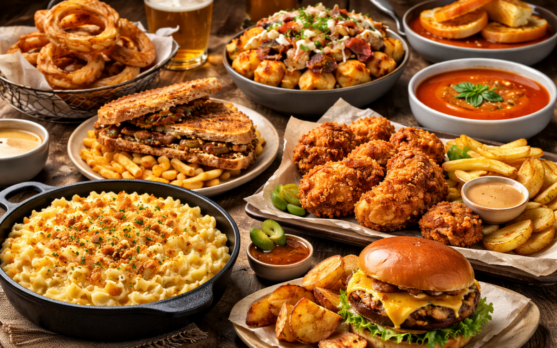
A Friday-night dinner no longer has to look like dinner. In more homes, it looks like a tray: chicken bites, potato wedges, garlic bread, coated vegetables, dips, maybe something sweet pulled from the freezer ten minutes later. The children eat in waves. The adults eat from the edge of the board. A streaming show, a game, a late work call or a sports practice has broken the old plate structure. Frozen food has spent years selling snacks and meals as separate ideas. Modern evenings are starting to mix them on the same tray.

Dinner is losing its plate
The word “snack” still makes some frozen executives think too small. It suggests impulse, grazing, a bag opened between meals. Useful, but secondary. The behaviour now emerging around frozen is more substantial than that. It is not just snacking. It is dinner rebuilt from pieces.
Walk through a supermarket freezer on a Thursday evening and the separation still looks tidy. Pizza in one run. Potato in another. Appetizers, vegetables, bakery, desserts, proteins. The store map says these are different missions. At home, the missions collapse into one another. A tray of wings needs potato wedges. The potato wedges need dips. The dips need something green to make the whole thing feel less reckless. Garlic bread appears because somebody wanted “something extra”. A dessert waits in the freezer, not as a planned course, but as insurance.
This is the architecture that matters. Snack-dinner is not a single SKU. It is a meal assembled from small frozen centres of gravity: bites, sides, carriers, sauces, vegetables, bakery and little indulgences. It fits the way evenings are actually lived now — fragmented, informal, hungry at different times.
For frozen food, that is not a lifestyle cliché. It is a route to a bigger basket.
Conagra has already named part of the shift
Conagra’s 2026 view of frozen gives the clearest commercial clue. The company puts the US frozen category at USD 93.5 billion and calls out “takeout-style” frozen as a USD 14.3 billion annual sales space, driven by chicken formats, global flavours and shareable snacks. That is not a niche appetizer story. It is restaurant-at-home entering the freezer.
The wording matters. Takeout-style does not mean the consumer wants to cook a formal dinner. It means the consumer wants the mood of ordering in without the cost, delay or delivery friction. It means crisp edges, dipping, sharing, flavour cues borrowed from restaurants and a lower threshold for what counts as a proper evening meal.
AFFI and FMI’s 2026 Power of Frozen work points in the same direction from a different angle. Frozen is becoming part of meal planning, not just pantry backup. More shoppers are using frozen foods frequently, and a high share buy frozen with a specific meal or day in mind. Grocery Dive’s coverage of the same work noted US frozen sales reaching USD 87 billion in the 52 weeks ending September 2025, with frozen snack sales up nearly 70% versus 2019, to USD 4.4 billion.
That snack growth should not be filed away as a side note. It tells retailers where the informal dinner is moving.
The air fryer made the board more believable
Frozen snack-dinner needed a piece of equipment to make it credible. The oven was too slow for small bites. The microwave made too many products soft. The deep fryer belonged to foodservice, not the weekday home.
The air fryer changed the mood around coated and bite-sized frozen products. It did not make every product good. Some dry out. Some burn at the corners. Some carry instructions that feel as if nobody actually tested them. But for potato formats, chicken bites, vegetable bites, small bakery items and many coated proteins, it gave the home kitchen a shortcut to texture.
Texture is the hidden language of snack-dinner. Soft food can be dinner. Sharing food usually needs contrast. Crunch, dip, steam, pull, tear, bite. Frozen manufacturers that treat air-fryer compatibility as a claim rather than a product design discipline will get caught. The better products will be engineered for a real tray: different items ready at roughly the same time, enough holding quality to survive ten minutes on a coffee table, not so greasy that the second handful feels like a mistake.
The opportunity is not simply “air fryer ready”. It is synchronised eating. A protein bite, a potato side and a bakery carrier that all cook in the same window are more valuable together than as isolated packs fighting for attention.
Retailers should stop merchandising fragments as if they are unrelated
Retailers already understand meal deals in chilled, food-to-go and foodservice-adjacent categories. Frozen has been slower to build the same logic around informal dinners. Too many freezer layouts still make the shopper do the architecture alone.
That leaves money on the table. A game-night freezer mission is not a pizza mission. It is pizza plus sides, or chicken plus wedges, or dumplings plus edamame, or mozzarella sticks plus garlic bread plus sauce, or plant-based bites plus loaded potato. The shopper may not describe it that way. The basket will.
Online, this is easier to fix. Retailers can build “complete the board” prompts, air-fryer dinner bundles, family sharing nights, streaming-night trays, sports-night freezer baskets. The algorithm can suggest the dip that the freezer door cannot display. It can pair potato with protein, bakery with bites, vegetables with indulgent mains. Private label can do even more: a whole architecture under one brand, with matching cook times, portions and price ladders.
In store, the work is harder but still possible. Occasional freezer-end features, event-led adjacencies, QR-led meal boards, seasonal game-night blocks, cross-category signage that does more than shout “party food”. Frozen often complains that shoppers underuse the aisle. Sometimes the aisle simply asks them to work too hard.
Manufacturers need products that can sit together
Snack-dinner creates a different NPD question. A product no longer has to prove only that it tastes good alone. It has to prove that it belongs on the tray.
That affects pack size, cooking time, portioning, surface texture, dip behaviour, salt level, spice level and the way the product cools after cooking. A bite that is excellent for two minutes and tired after eight is not a good board product. A side that needs 28 minutes while everything else needs 11 will be used less often than the taste panel suggests. A product sold as “sharing” but portioned awkwardly for three people will irritate families in exactly the moment it was supposed to help.
Protein is especially important. Snack-dinner cannot live on beige carbohydrates and cheese alone, not if it wants to become a legitimate meal architecture rather than a guilty Friday workaround. Conagra’s frozen protein trend, also highlighted in its 2026 report, is relevant here. Protein gives the tray permission to be dinner.
Vegetables have a role too, but they cannot arrive as punishment. Coated cauliflower, broccoli bites, corn ribs, edamame, spinach formats and seasoned vegetable sides can make the board feel more complete. The challenge is honesty: consumers will accept indulgence with some balance. They will not accept a product that pretends to be health-led while eating like a compromise.
Frozen bakery may be underused in this architecture. Garlic bread, flatbreads, pretzel bites, mini buns, pastry bites and other carriers can turn a loose set of snacks into a meal with structure. They also give retailers another way to raise basket value without forcing a formal main course into the occasion.
Foodservice has been doing this for years
Bars, cinemas, bowling venues, pubs, casual dining chains and hotel lounges have long understood the economics of shareable frozen food. Starters become platters. Platters become dinner. A table orders wings, fries, breads, dips and a small sweet item, and nobody complains that the meal lacked a centrepiece.
Retail is now borrowing that behaviour for the home. The reason is not mysterious. Delivery is expensive. Restaurant prices are uncomfortable for many households. Streaming keeps people inside. Children’s schedules fragment the evening. Work-from-home does not always create more cooking time; often it just blurs the point at which work ends and dinner should have begun.
Frozen can serve that mess better than most categories. It waits. It portions. It lets a household cook half a bag now and the rest next week. It can deliver restaurant cues without requiring a booking, a rider or a forty-minute delay.
Factories, however, will feel the complexity. Small pieces are not simple pieces. Coating control, crumb loss, oil pickup, freeze stability, bag separation, breakage, seasoning distribution, allergen changeovers, multi-SKU scheduling and promotional pack formats all matter. Snack-dinner may look casual in the living room. It is not casual in production.
The freezer needs to sell the occasion, not just the item
By 2027, expect more frozen ranges built around air-fryer sharing, takeout-style dinners, global bites and family boards. By 2030, more retailers will treat these as meal systems online, even if the physical aisle remains divided by old category logic. Longer term, the more interesting shift is from single-serve and family-size thinking toward modular-serve thinking: products designed to combine, not merely stand alone.
That has consequences for everyone. Category managers will need to think in boards and baskets. Manufacturers will need to design for pairing and timing. Packaging teams will need to solve partial use and resealability without adding cost nobody will pay for. Retail media teams will need to sell occasions: Friday night, game night, kids’ activity night, film night, quick guests, restaurant-at-home.
The name “snack-dinner” may not last. The behaviour will. Consumers rarely wait for industry language before changing how they eat.