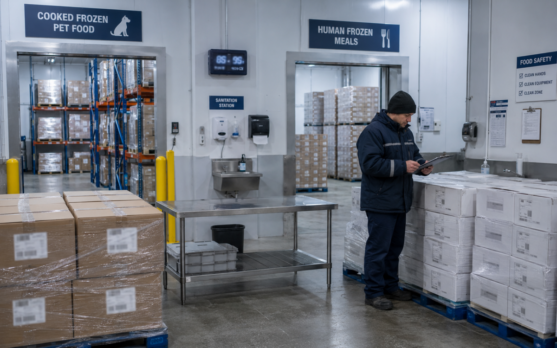
At 2:17 a.m., a freezer alarm goes off in a warehouse full of frozen food. The building is insured. The refrigeration plant is insured. The stock has a declared value. On paper, the risk file looks complete. But the loss will not be decided by the declared value of the panels or the age of the compressor alone. It will be decided by who hears the alarm, how fast they move, whether the door was already open too long, whether the maintenance log was honest, whether the system can be controlled after a cyber outage, and whether anyone rehearsed this moment before it became expensive.

The premium is moving inside the operation
Cold chain insurance has traditionally looked hard at assets. Building construction. Location. Fire protection. Refrigeration plant. Stock value. Machinery breakdown. Business interruption exposure. Flood, storm, ammonia, power supply, security. All of that still matters. No underwriter will ignore a badly built cold store because the warehouse team looks disciplined.
But the cold store is no longer just a building with expensive insulation and compressors. It is a live system of doors, alarms, sensors, forklifts, software, maintenance habits and human response times. Two warehouses can look similar from the outside and carry the same temperature set point. One is tight, logged, drilled and boring in the best possible way. The other survives on operator memory and luck.
Insurance does not like luck.
The shift will not arrive as a neat new product name. Few policies will be sold as “behaviour-based cold chain insurance” next year. The change will come through underwriting questions, renewal meetings, engineering surveys, deductibles, sub-limits, exclusions and claims scrutiny. The insurer will still ask what the facility is worth. Increasingly, it will also ask how the facility behaves when something starts to go wrong.
Temperature records are no longer enough
Frozen food businesses already monitor temperature because regulation, customers and common sense demand it. In the European Union, quick-frozen food rules require temperature monitoring in transport, warehousing and storage. That creates a record. It does not automatically create confidence.
The useful question is no longer simply whether temperatures were logged. The sharper question is what the logs reveal. How many deviations occurred? Which zone? How long? Did they cluster around loading? Did the same door appear again and again? Was the alarm acknowledged in four minutes or forty? Was product placed on hold, or did it keep moving because the shift was busy?
A cold store can have sensors everywhere and still behave poorly. A dashboard is not discipline. A red alarm that nobody treats as urgent is just a digital decoration.
This is where risk pricing begins to get behavioural. Door events, alarm response time, deviation history, maintenance discipline and training records are not operational trivia. They are clues about loss frequency and loss severity. A warehouse with many small incidents and clean responses may be easier to insure than a warehouse with suspiciously quiet logs and weak evidence. Silence is not always a good risk. Sometimes it is poor visibility.
The dangerous minutes are easy to measure
Cold chain losses often grow in minutes that look unimportant while they are happening. A freezer door stays open during a rushed pick. A loading bay gets congested. A sensor alarms after a defrost pattern that nobody has reviewed properly. A compressor begins to show the same fault code every month. A night operator resets an alarm because the last three were harmless.
Then the harmless alarm is not harmless.
Insurers and brokers do not need to guess as much as they once did. Modern cold stores generate evidence: door openings, temperature curves, equipment status, alarm acknowledgement, service visits, parts replacement, generator tests, access logs, WMS downtime, remote-control access, refrigeration controller alerts. The operator may not package that evidence for insurance yet, but it exists somewhere in the business.
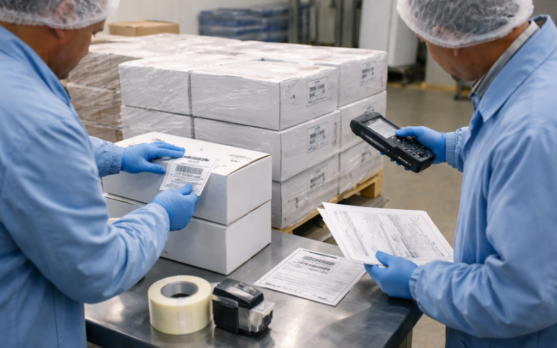
The better companies will turn those records into a risk story before renewal. Not a glossy safety claim. A file. Twelve to twenty-four months of deviations. Average alarm response time. Escalation rules. Preventive maintenance completed on time. Sensor calibration. Emergency drills. Evidence that the same incident does not keep happening with a different excuse.
The weaker companies will keep offering the sentence every insurer has heard too often: “We have not had a major loss.” That is not the same as being a good risk. It may only mean the business has not yet been tested.
Refrigeration failures are rarely just mechanical
Mechanical refrigeration has a long and well-documented loss history. Compressors fail. Electrical systems fail. Ammonia systems leak. Forklifts hit equipment. Valves, flanges, sensors and control devices age. A cold store is full of machinery that works hard in an unforgiving environment.
Still, the pure mechanical story is incomplete. A compressor failure becomes a larger loss when warning signs are ignored. An ammonia release becomes more severe when detection, isolation, ventilation or emergency actions are weak. A door impact becomes a pattern when traffic discipline is poor. A small leak in an unoccupied zone becomes expensive if nobody walks the area until the detector threshold is crossed.
That is where behaviour enters the premium conversation. Maintenance logs are not paperwork for the engineering department. They are evidence of care. Training records are not HR files. They are proof that people know what to do before a loss spreads. Spare-parts lists, service contracts and emergency shutdown drills are not internal housekeeping. They shape the size of the claim.
A cold store does not fail only when equipment breaks. It fails when weak habits are allowed to look normal.
Cyber has entered the freezer room
The cold chain has become digital enough for cyber to stop being an IT side issue. Refrigeration controls, WMS, ERP, remote monitoring, automation, access systems, transport visibility and customer portals now sit close to the physical movement and protection of frozen stock.
A cyber incident does not have to warm a freezer directly to cause damage. It can blind the warehouse. It can disrupt picking, receiving, dispatch, inventory visibility, maintenance response or customer communication. If control systems are manipulated or disabled, the line between cyber loss and property loss becomes uncomfortable.
The industry has already seen the warning signs. Americold reported a cyberattack in 2023 that forced parts of its operations offline while systems were secured. In 2024, the ransomware attack on Blue Yonder disrupted supply chain software used by major retailers, including warehouse management processes for Morrisons’ fresh food and produce operations. Frozen operators should not dismiss that as someone else’s fresh-chain problem. The dependency is the point.
Insurance language has not always kept up cleanly with this overlap. Property policies, cyber policies, machinery breakdown, stock throughput and business interruption can meet awkwardly when a digital event produces physical consequences. Risk managers know the danger: everyone agrees there was a loss; the argument begins over which policy was supposed to answer.
For cold chain operators, cyber posture will become part of operational credibility. Segmented networks. Multi-factor authentication for remote access. Backups. Tested recovery. Controller access controls. Incident response plans that include temperature-controlled stock, not only laptops and email.
CFOs will ask operations for evidence
The commercial insurance market has softened in parts of 2026. Marsh reported global commercial insurance rates down 5% in the first quarter, with property rates down 9%. That does not mean every cold chain operator automatically gets a better deal. Softer markets still reward better risk stories.
This is where the CFO becomes interested in door discipline.
A warehouse manager may see alarm response time as an operational KPI. A CFO should see it as a cost-of-risk argument. Better records can support negotiations on deductibles, limits, spoilage extensions, machinery breakdown, business interruption, stock throughput and cyber-related gaps. Weak records can do the opposite, even in a more competitive insurance market.
Food and beverage companies already rank business interruption as a major internal risk. In frozen, interruption is rarely clean. A plant stoppage can trap finished goods. A cold store failure can compromise customer orders. A WMS outage can create stock uncertainty. A refrigeration event can turn insured stock into a disposal problem, a retailer problem and a margin problem on the same day.
Operations and finance have often spoken different languages here. Operations talks in alarms, evaporators, docks, shifts and maintenance windows. Finance talks in premiums, deductibles, limits and retained risk. Behaviour-based underwriting will force the translation. The minutes between alarm and action may start appearing, indirectly, in the price of cover.
The cold chain risk file will become a negotiating tool
The smartest operators will not wait for the insurer to ask better questions. They will build an insurance-ready cold chain file.
It will show temperature-zone maps, stock values by zone, deviation history, alarm response logs, door-event trends, preventive maintenance, generator tests, sensor calibration, emergency repairs, root-cause actions, training records, spare-parts readiness, service contracts and cyber controls. It will include practical scenarios: compressor failure, power loss, door failure, ammonia leak, WMS outage, cyber incident, weekend alarm with no senior manager on site.
The file does not need to be pretty. It needs to be credible.
Over the next few years, underwriting will probably become more selective about this evidence. Not fully live pricing. Not a cold-store version of consumer telematics overnight. More likely, a gradual move from annual questionnaires to risk data packs, engineering reviews and behaviour scorecards. Insurers will want to know whether the operator can prove control, not just declare it.
By the early 2030s, large cold stores and frozen 3PLs without behavioural data may look exposed in renewal discussions. They may still be insurable. But they will be harder to defend, especially if they hold high-value stock, run older refrigeration equipment, rely on remote access, or carry tight service commitments for retailers and manufacturers.
The cold chain has always sold trust. Insurance will increasingly ask for the logs behind it.